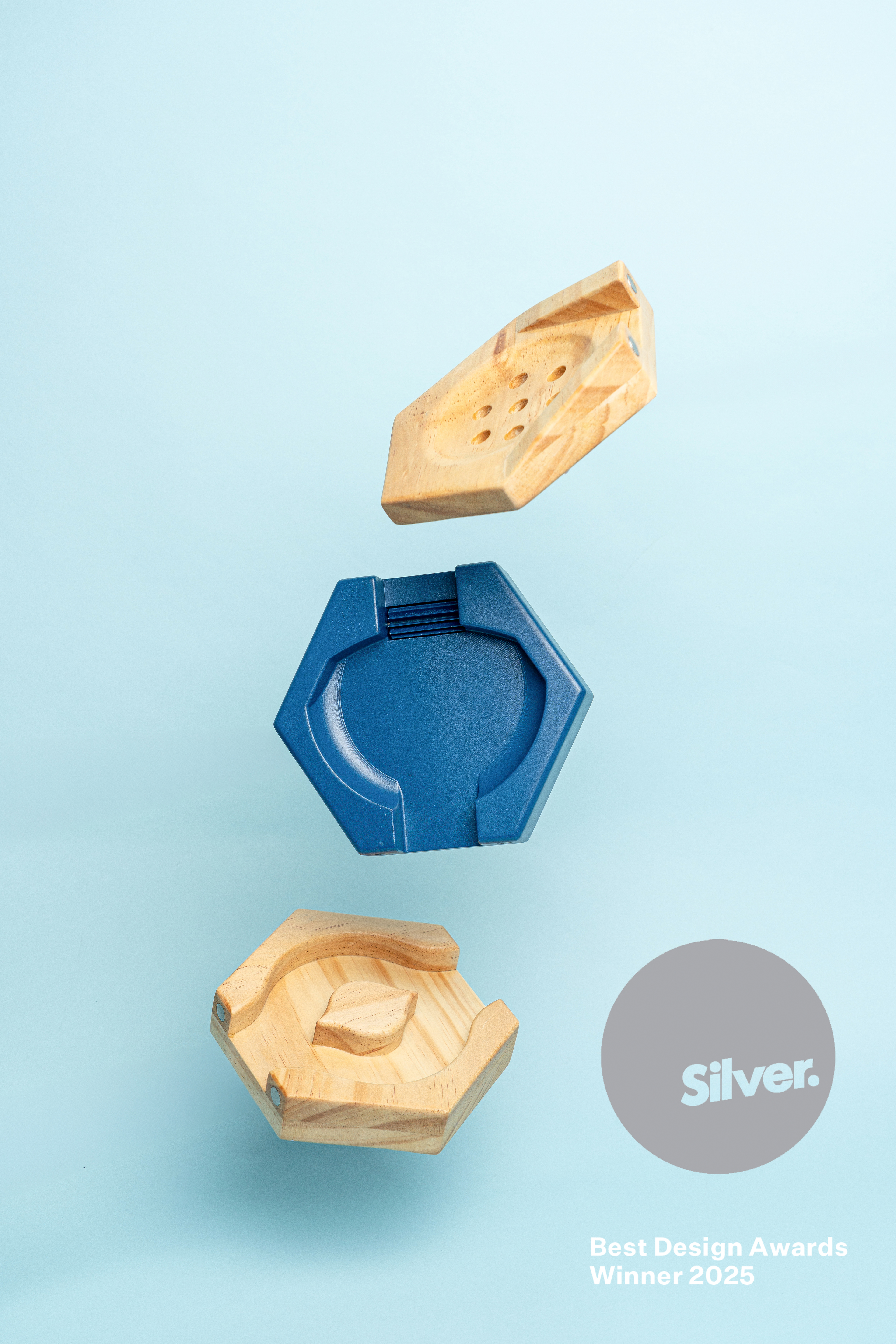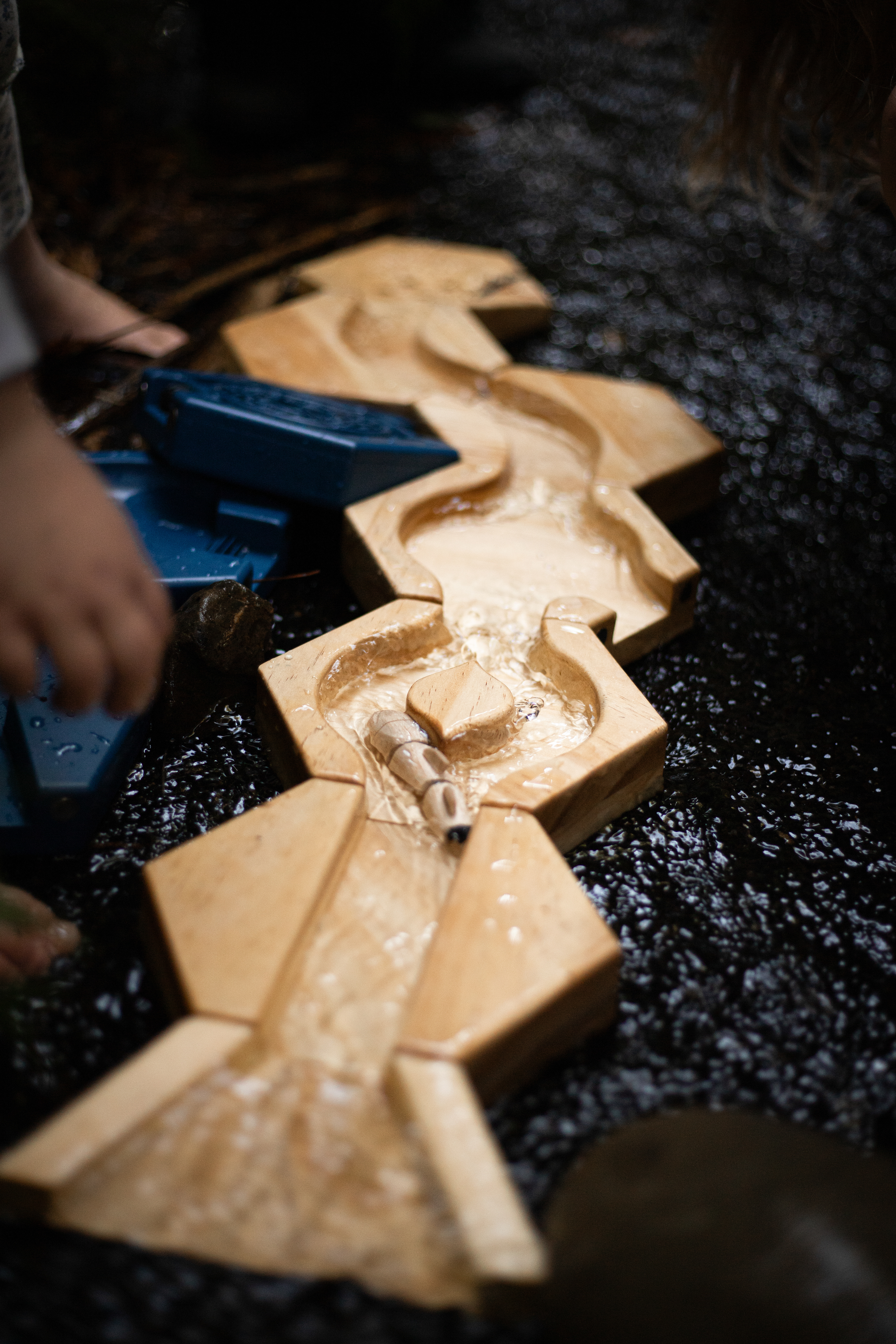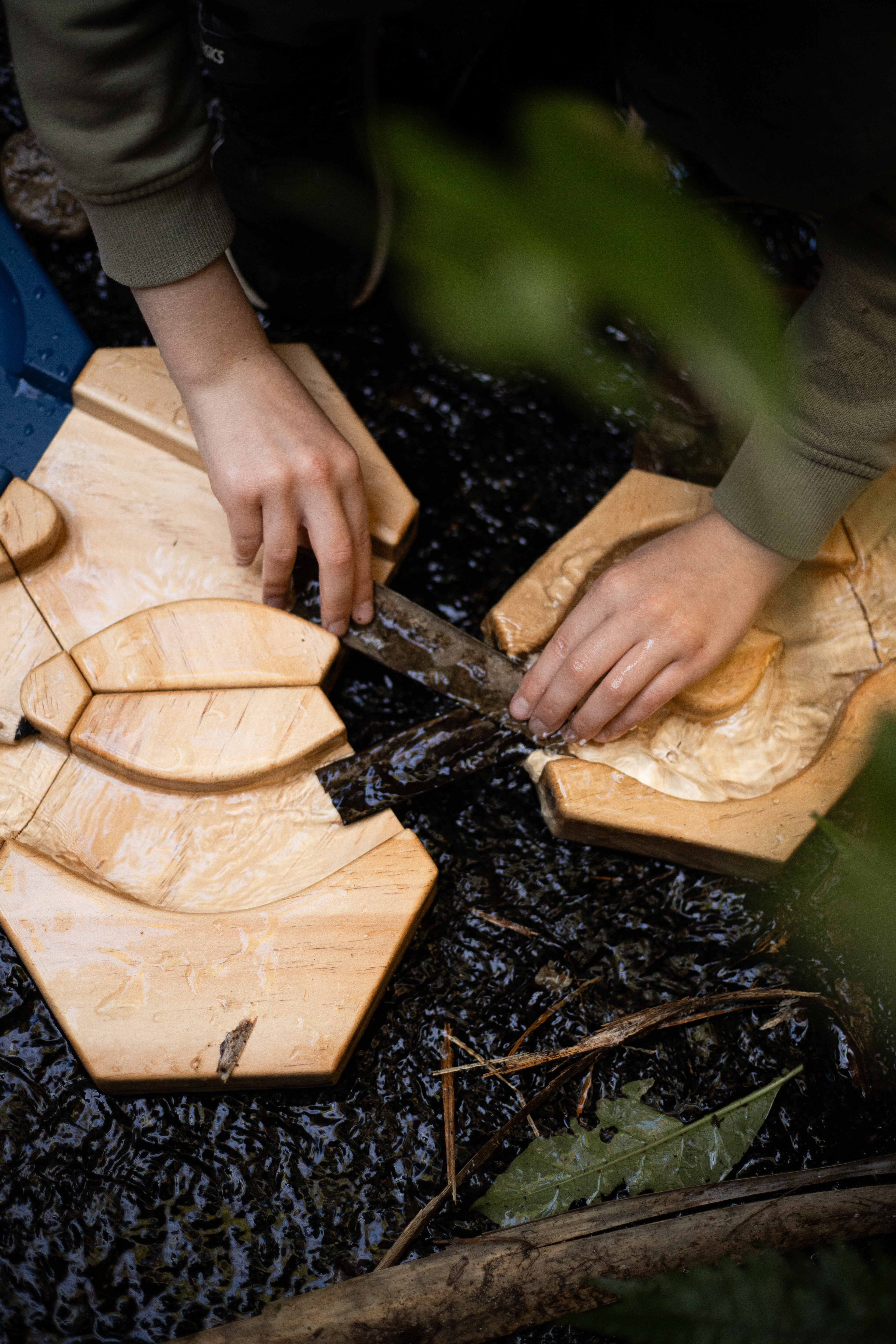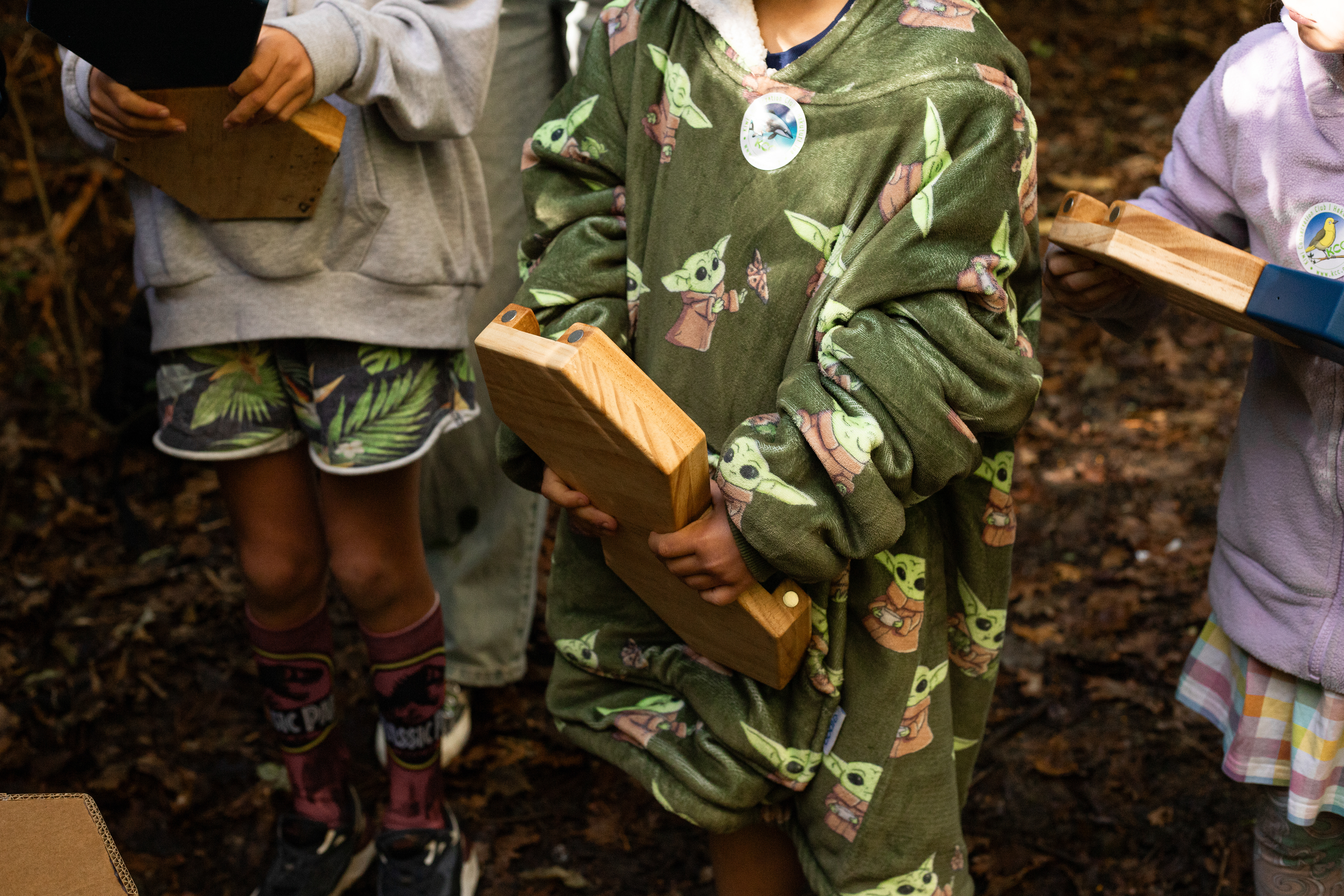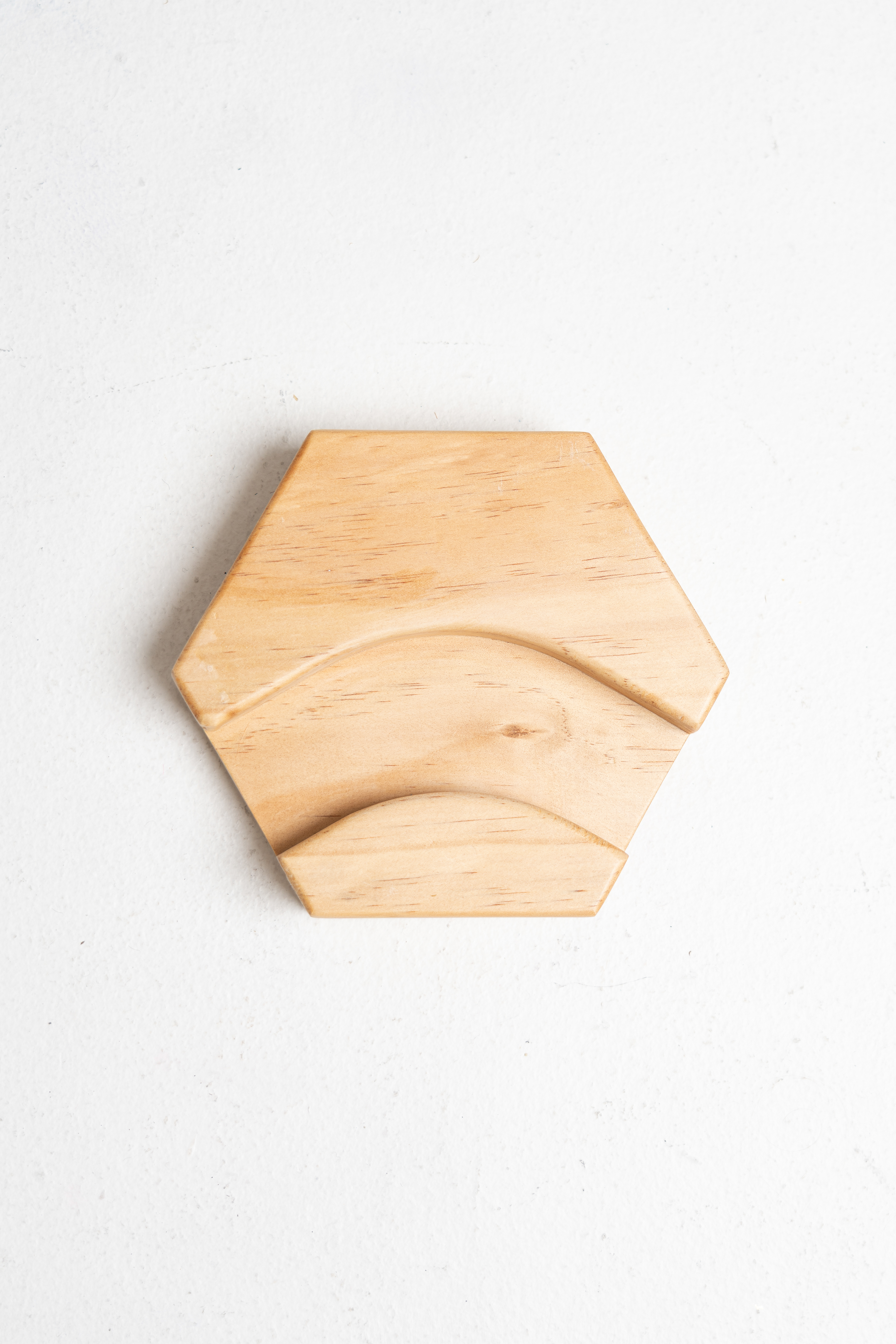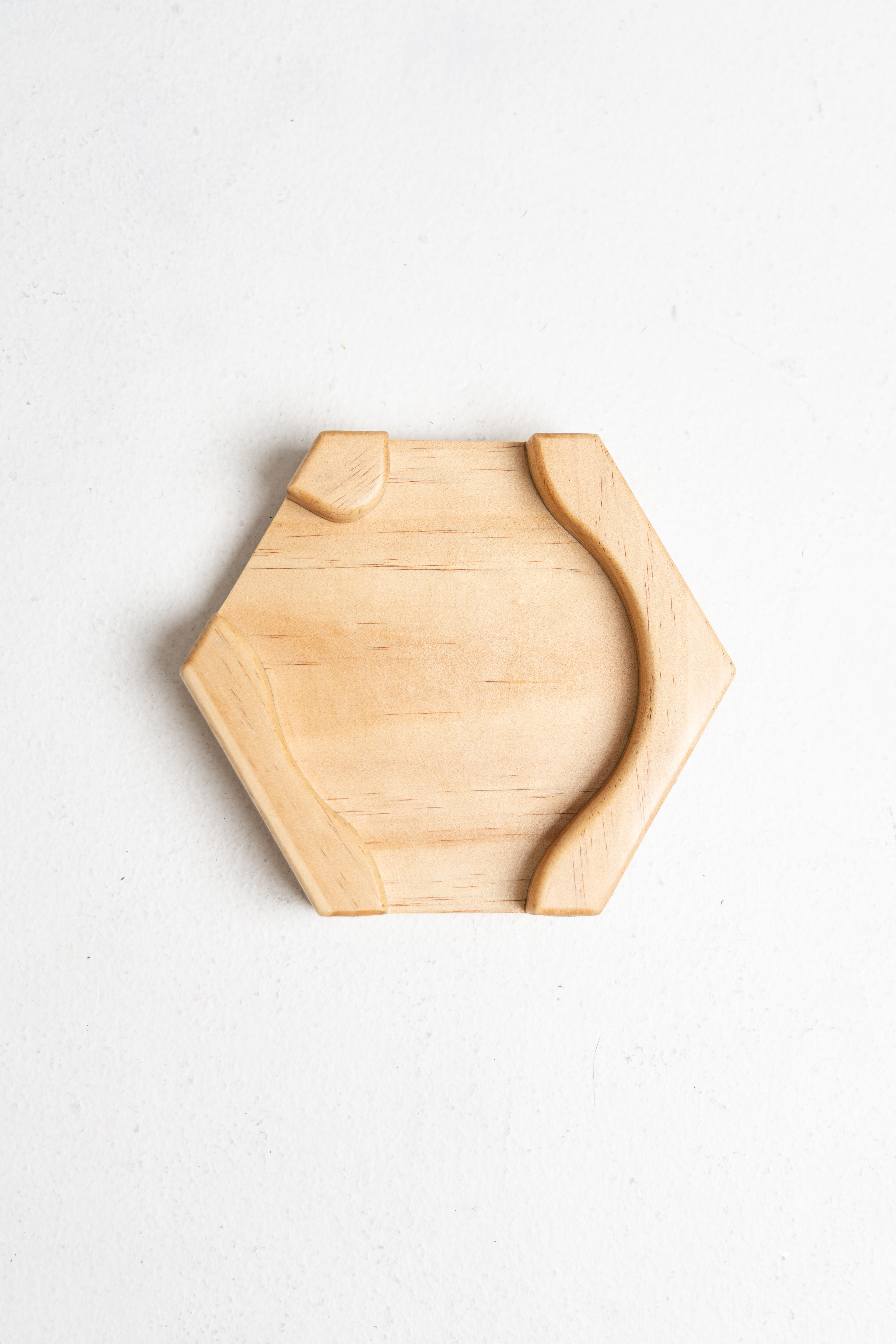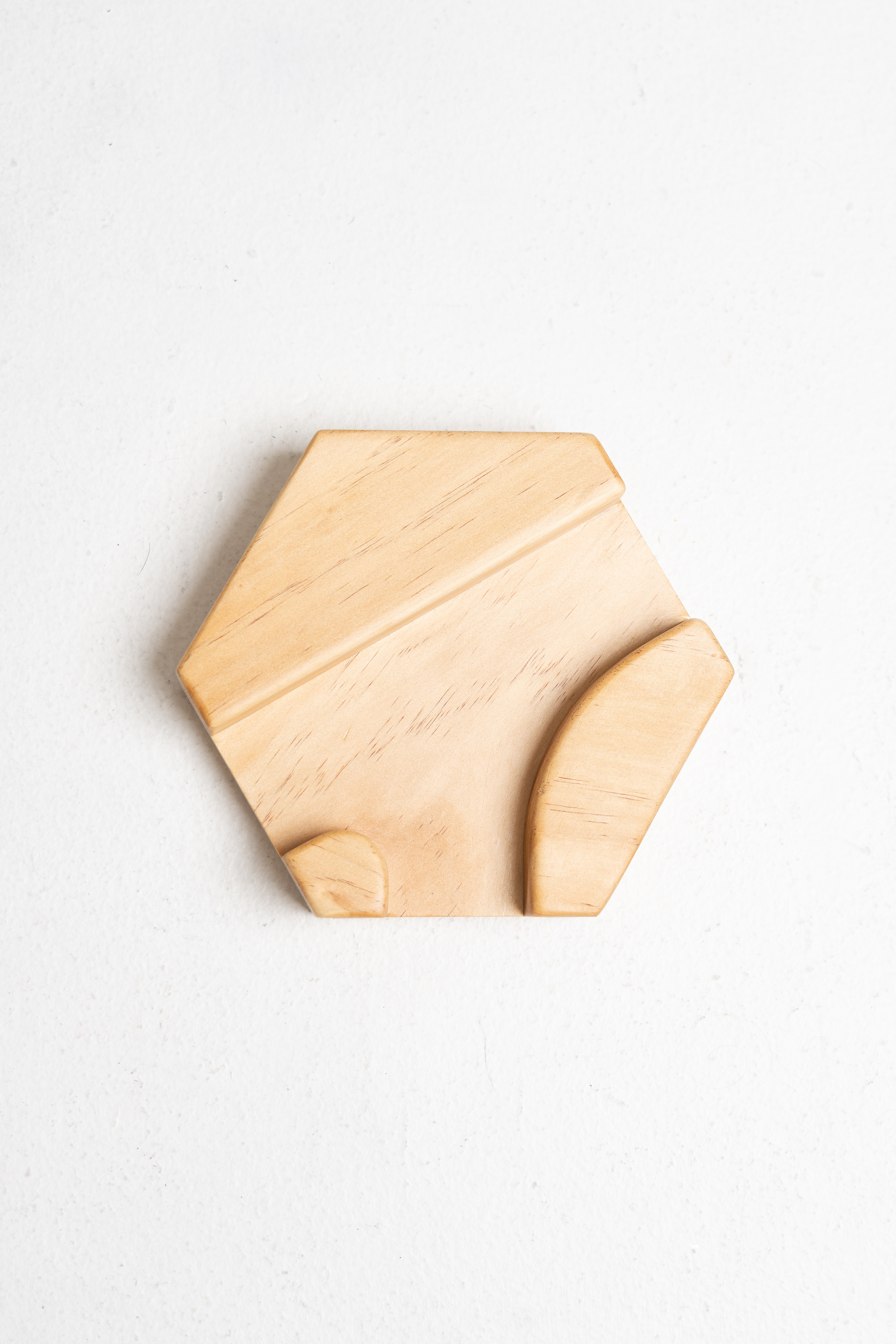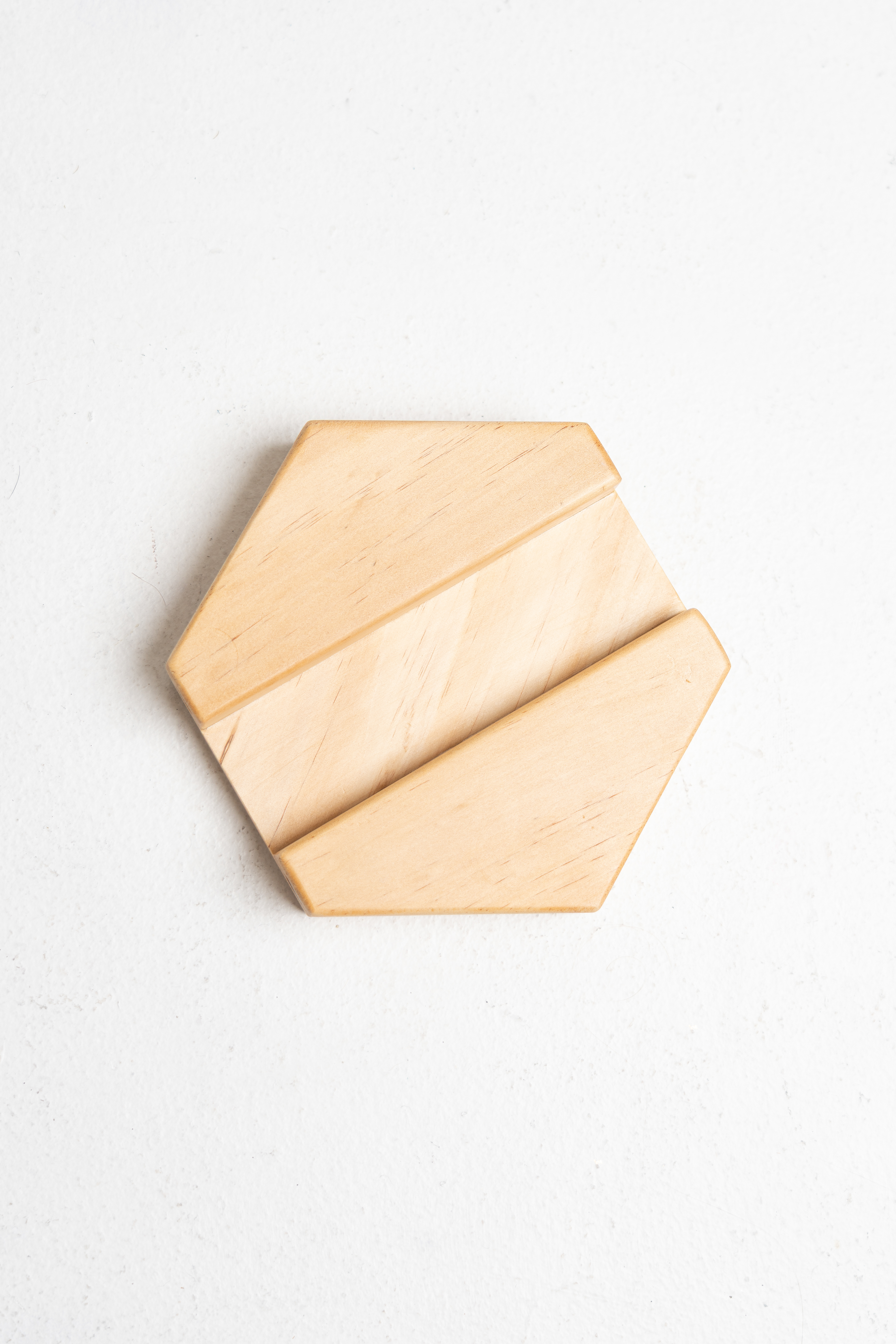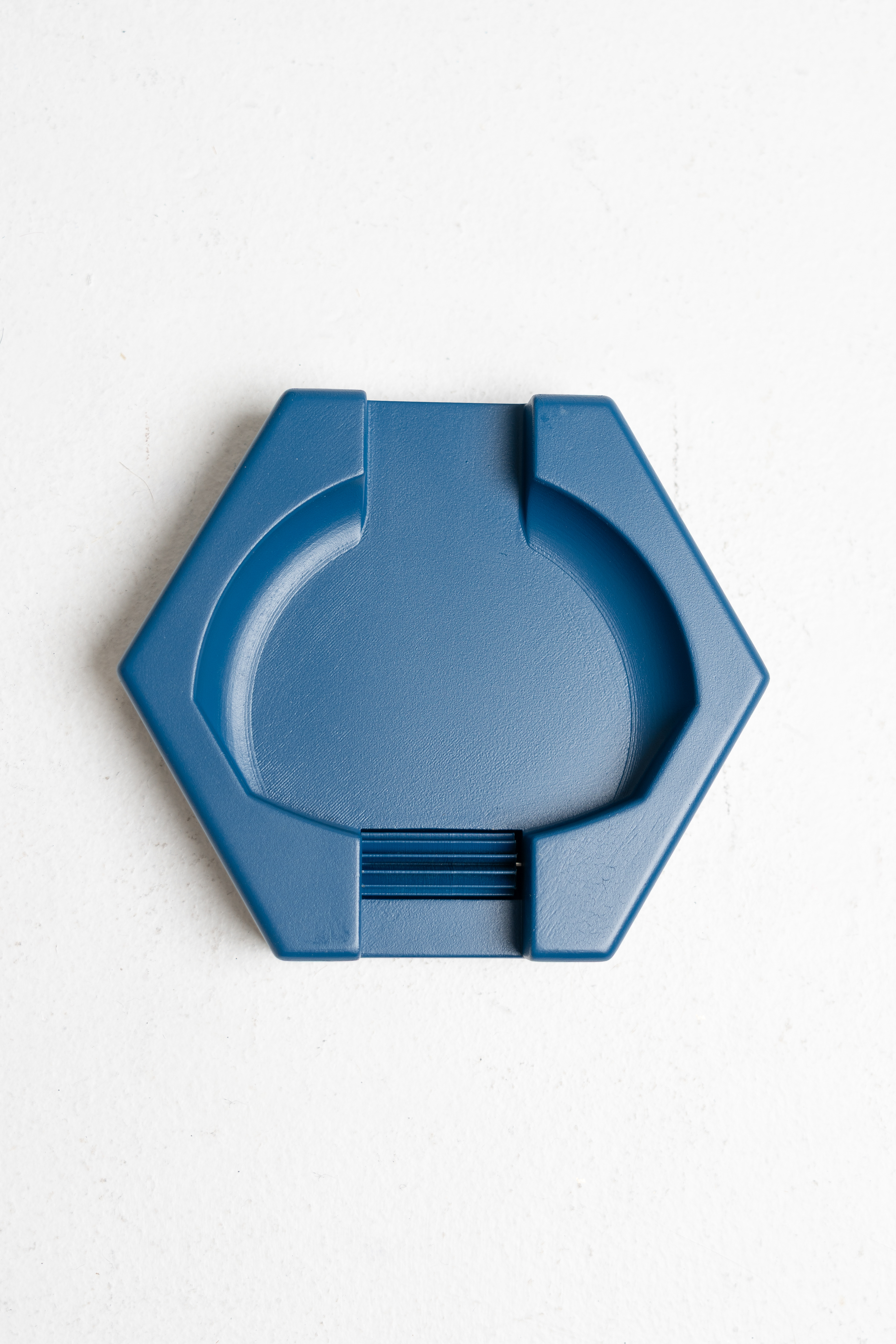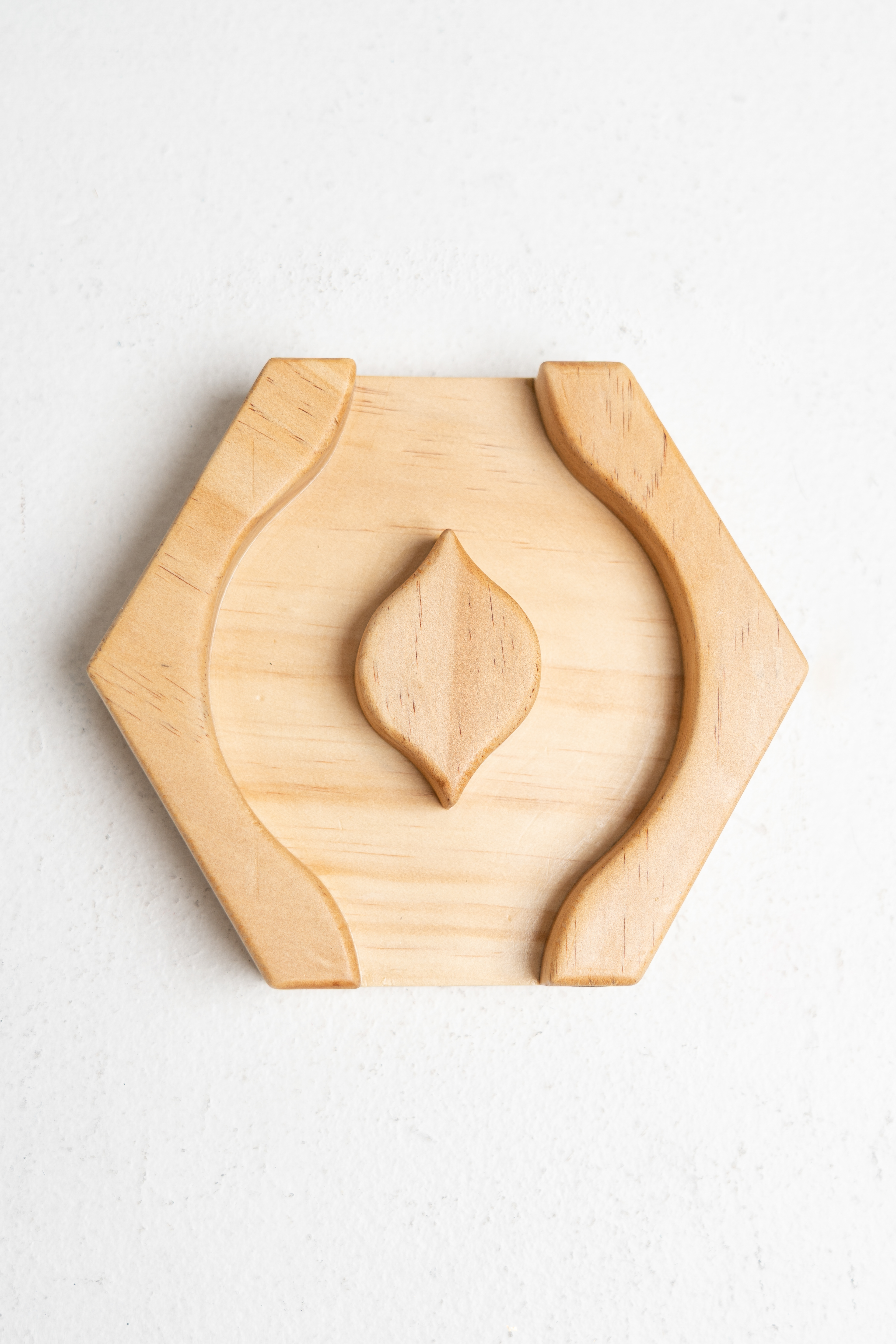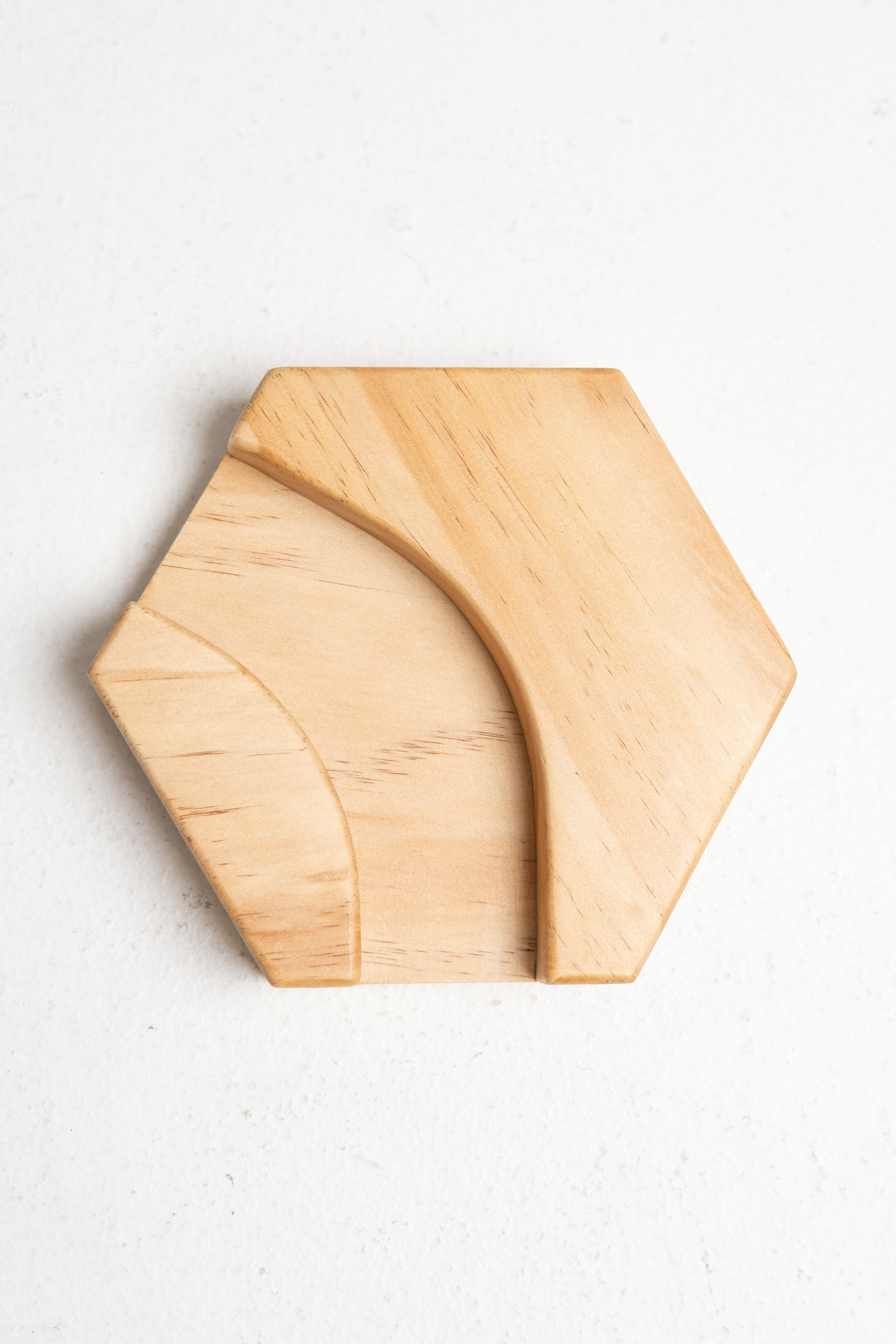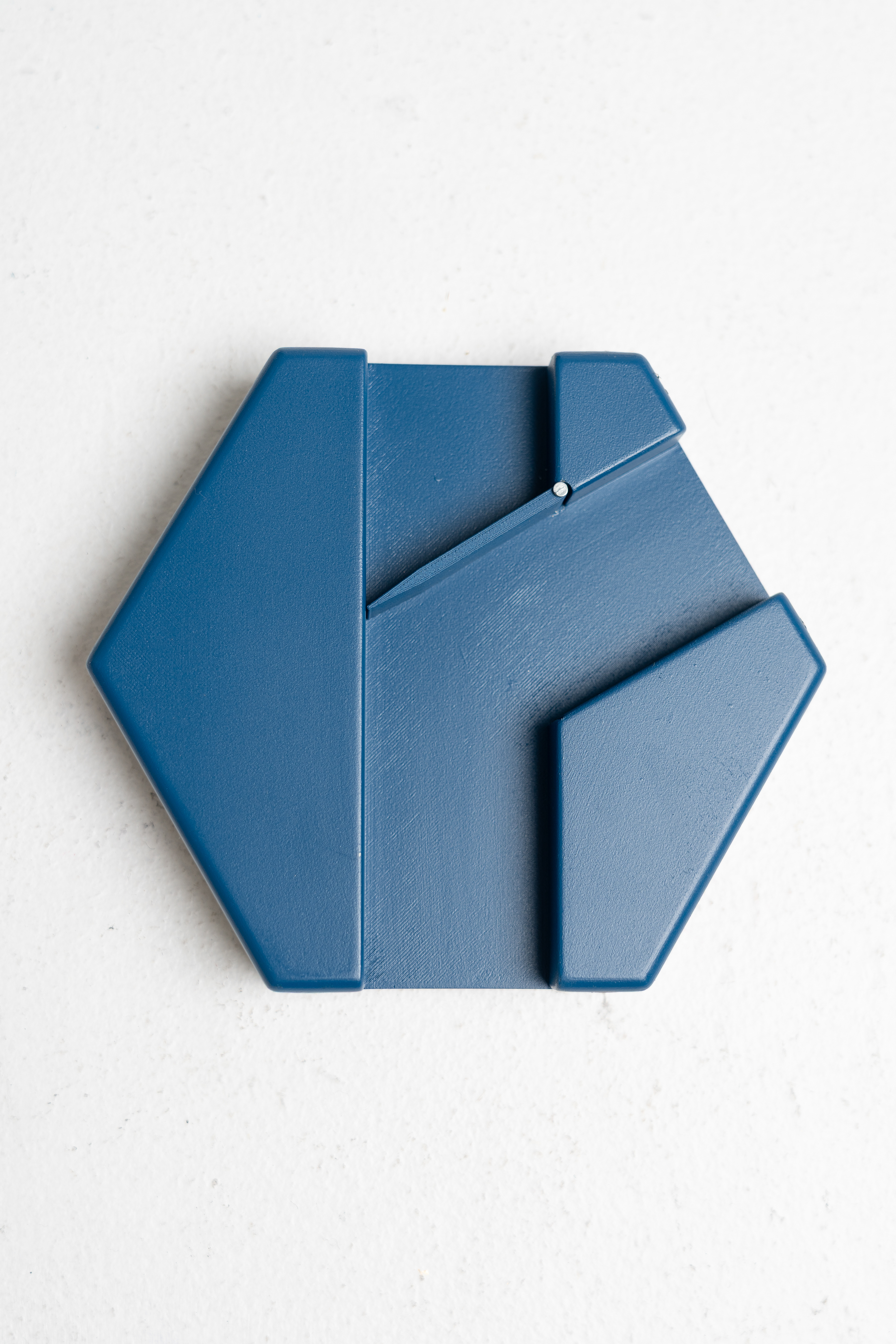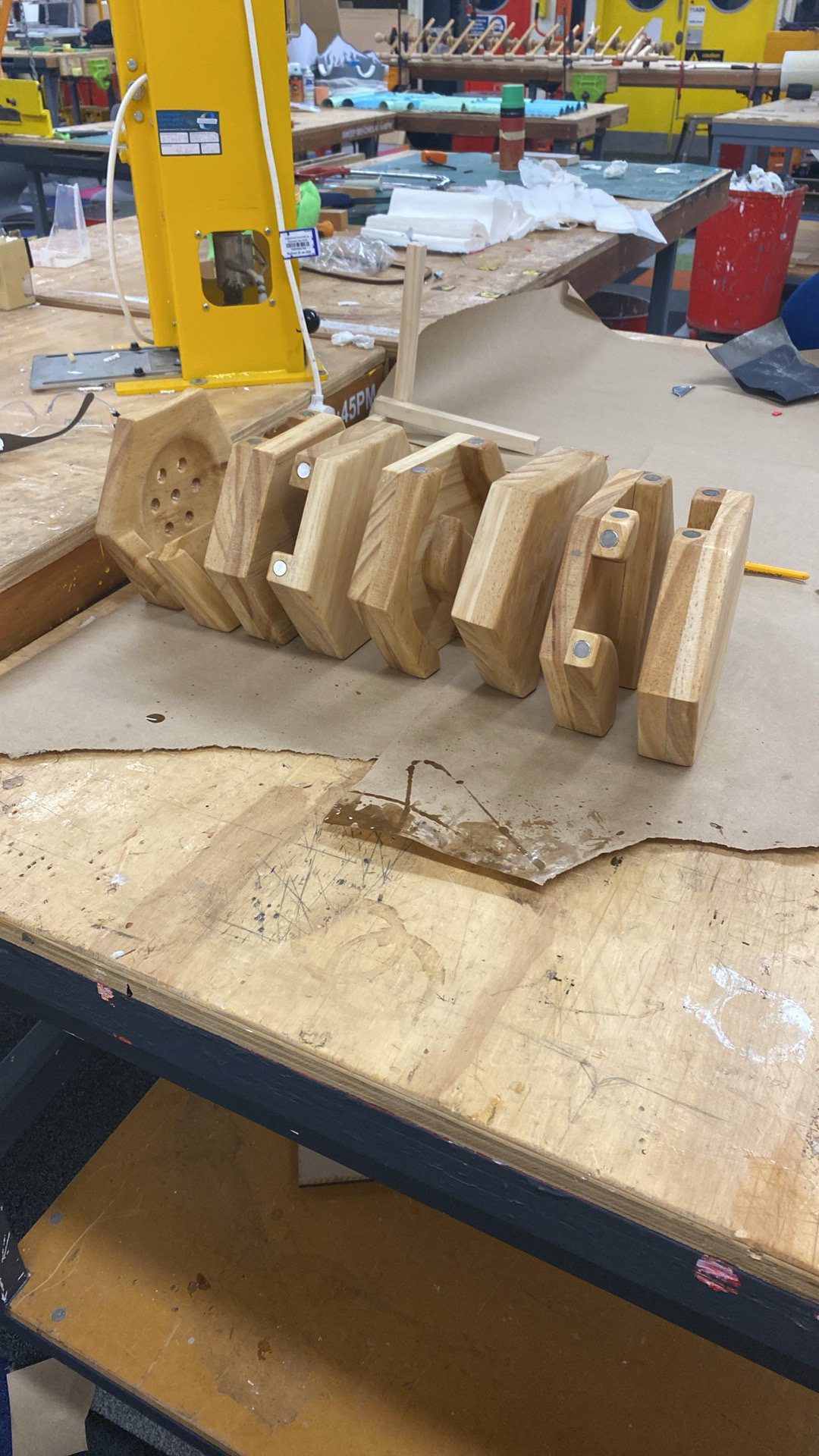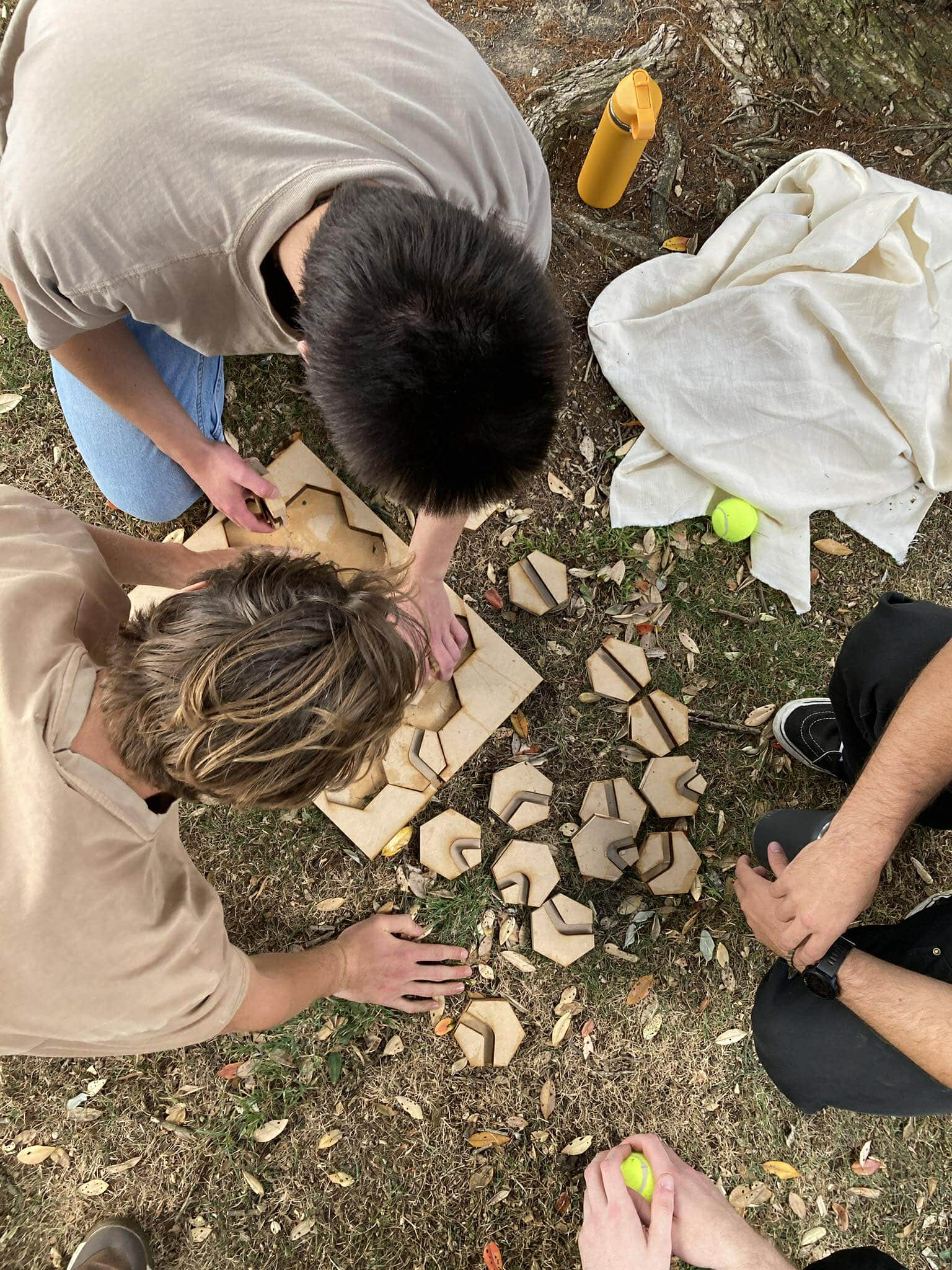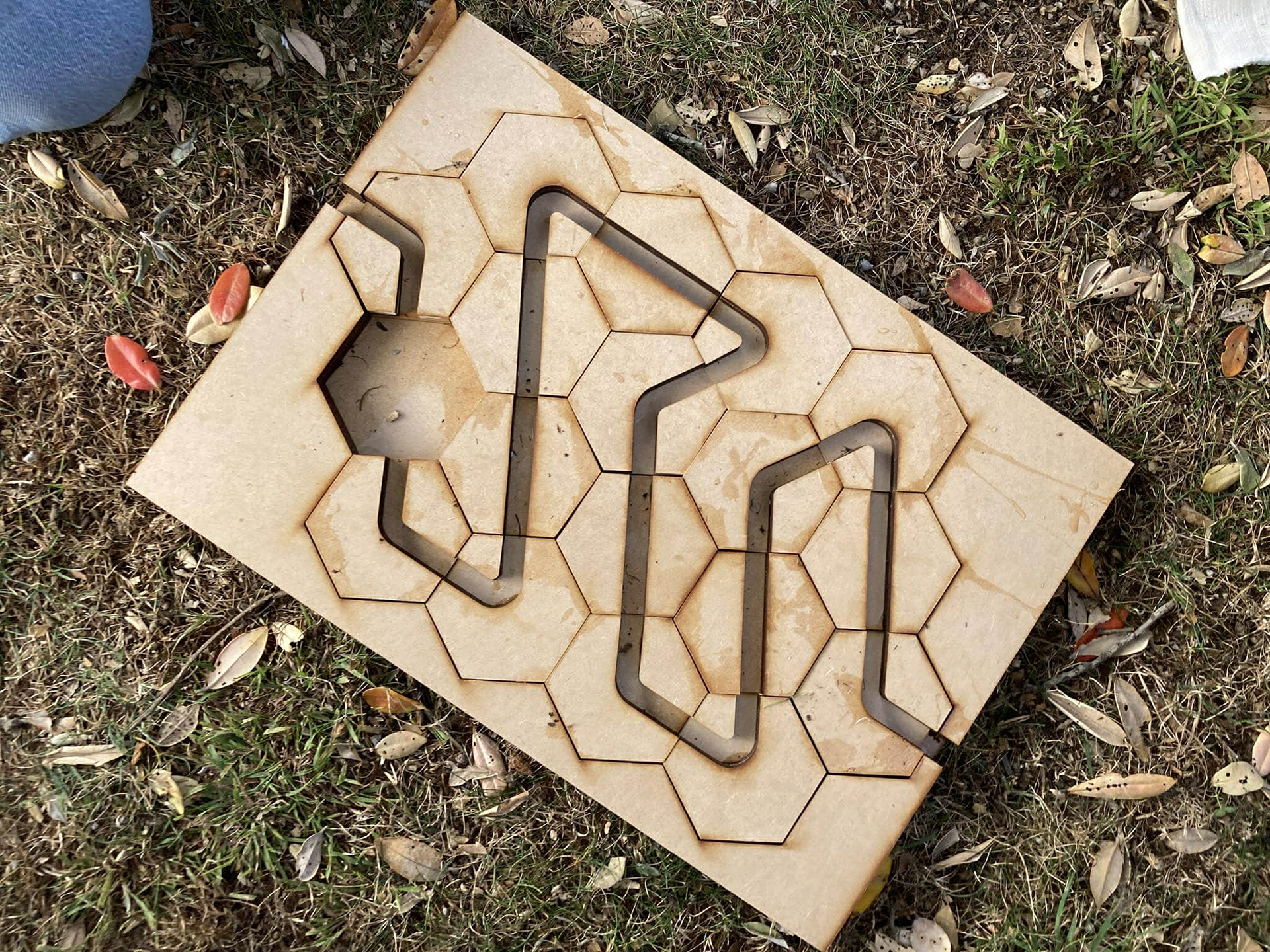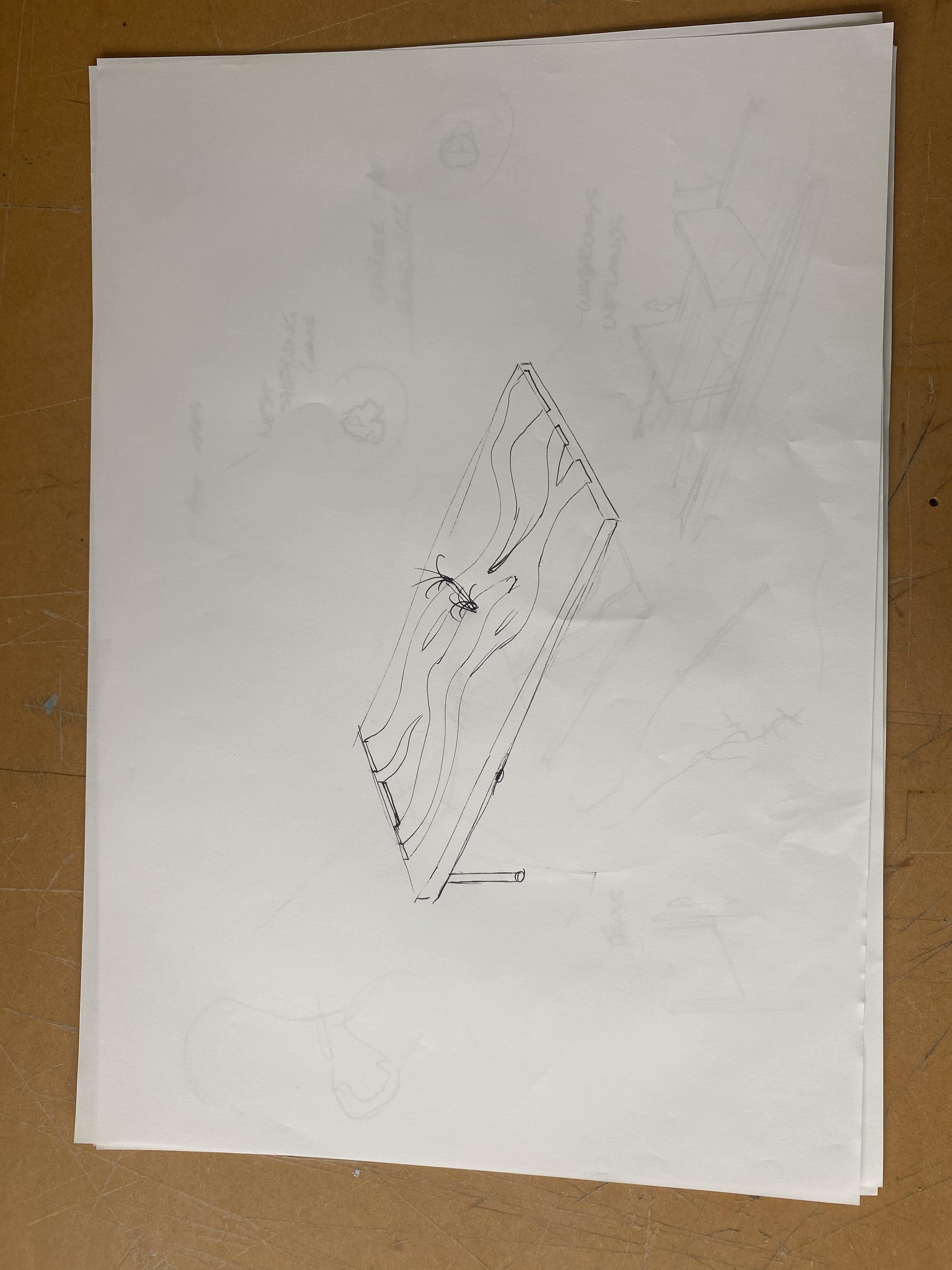
Wild Wetlands is a toy designed for 1-5 children aged between 5 and 12 with the primary goal of encouraging children to engage with nature.
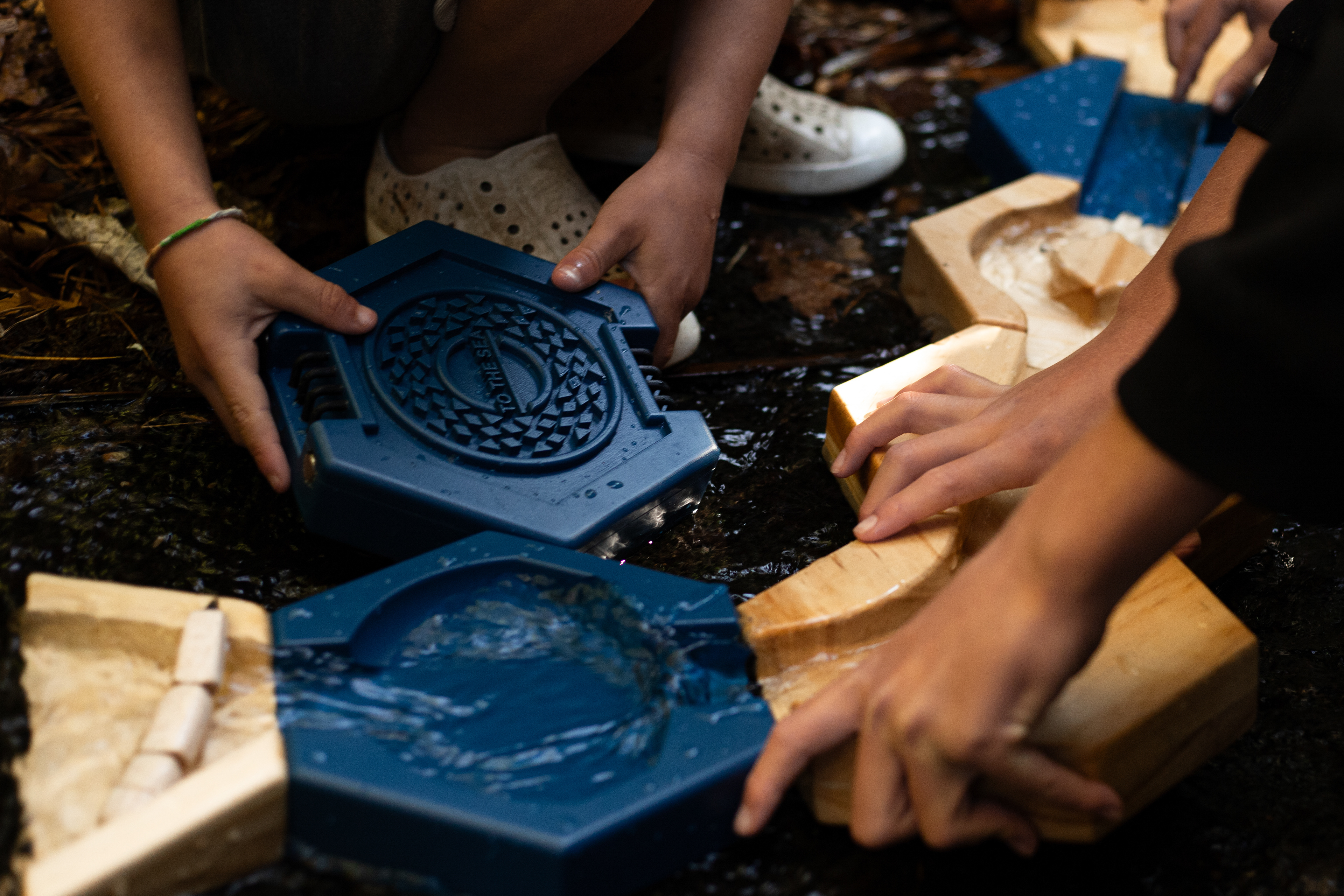
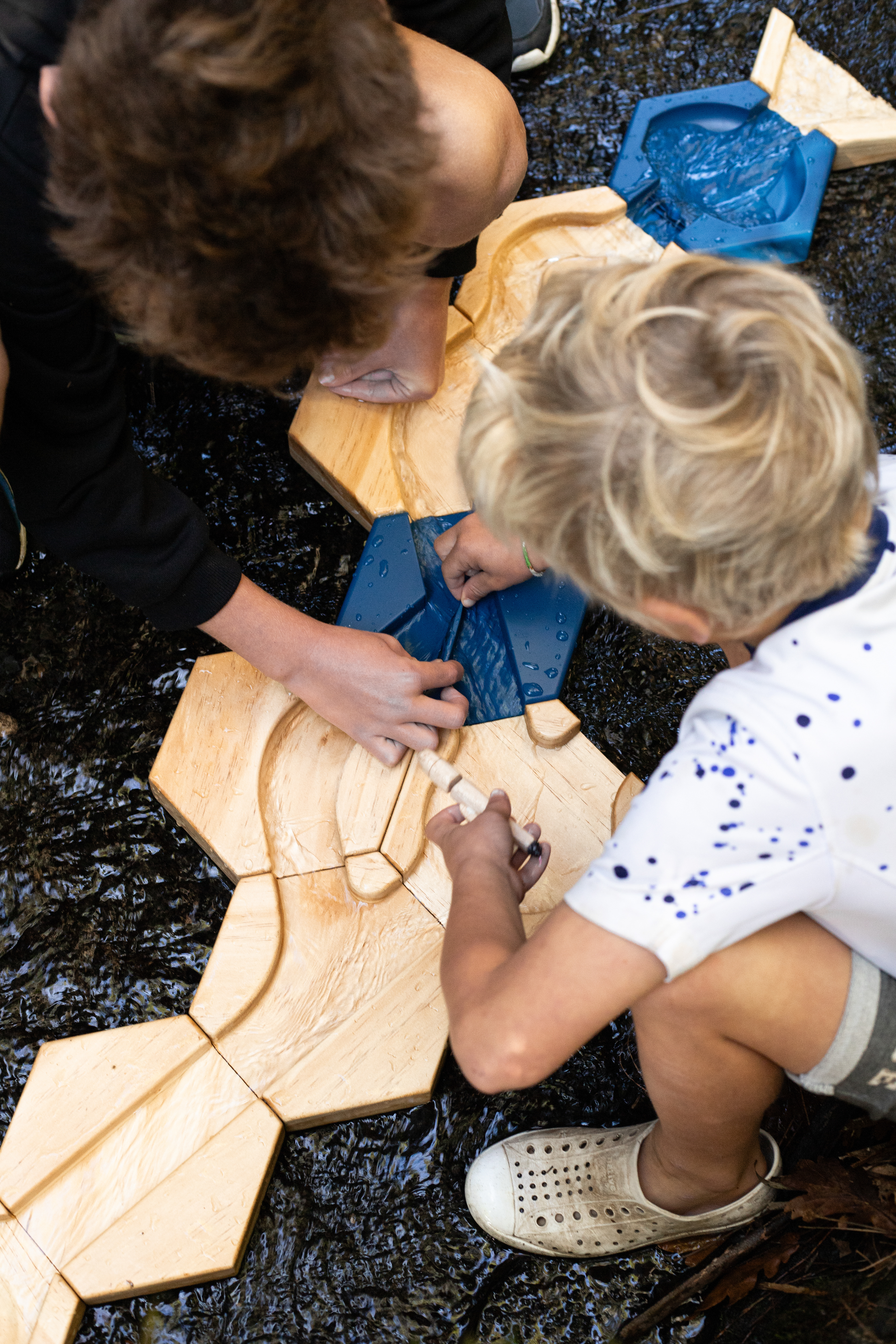
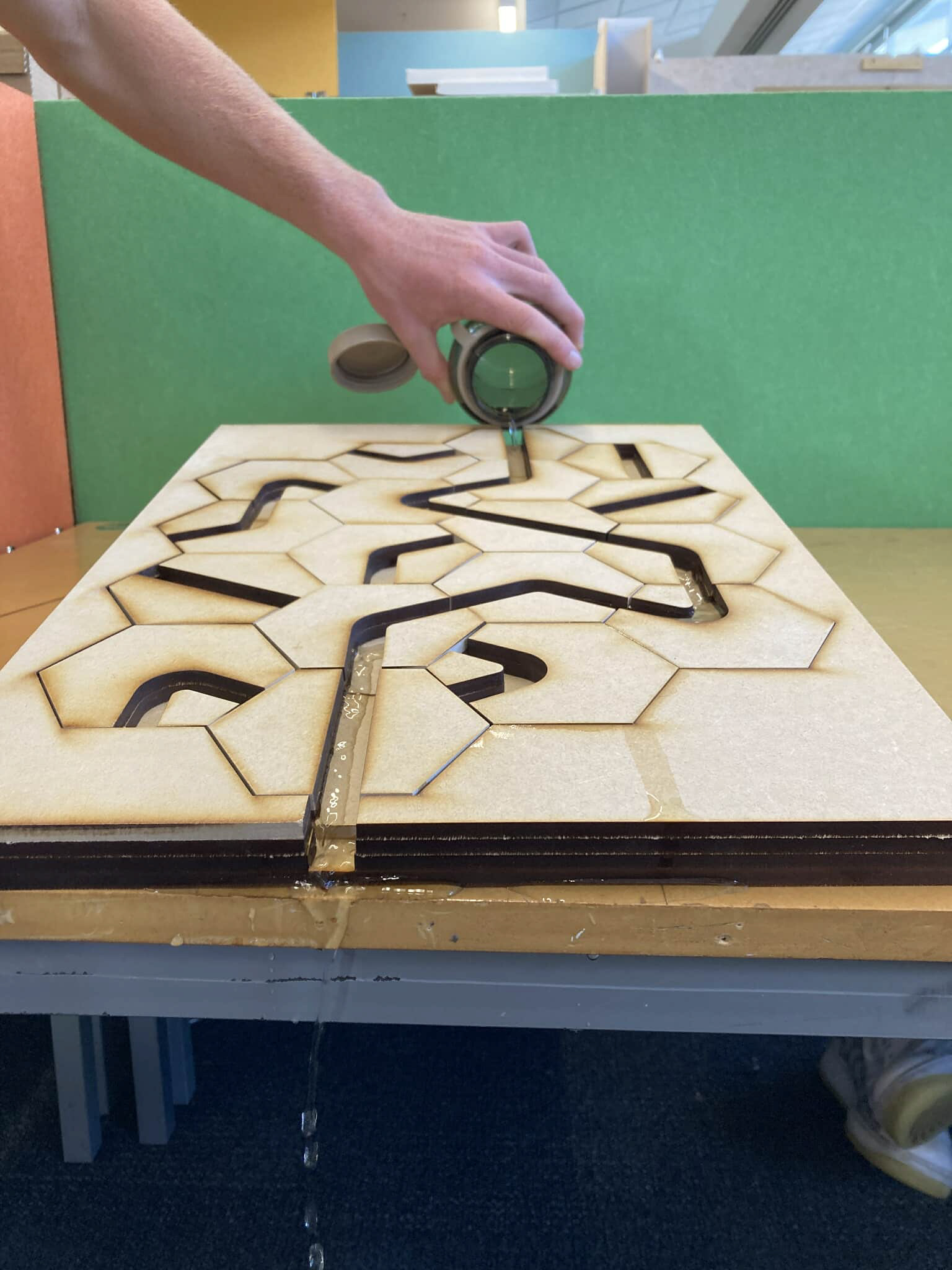
The core interaction involves creating a route, establishing a consistent water flow, sending the eel down the route, and then repeating the process with modified paths. It is a trial and error free play game guided by a main objective: get the eel to the wetland (end tile).
The core interaction involves creating a route, establishing a consistent water flow, sending the eel down the route, and then repeating the process with modified paths. It is a trial and error free play game guided by a main objective: get the eel to the wetland (end tile).
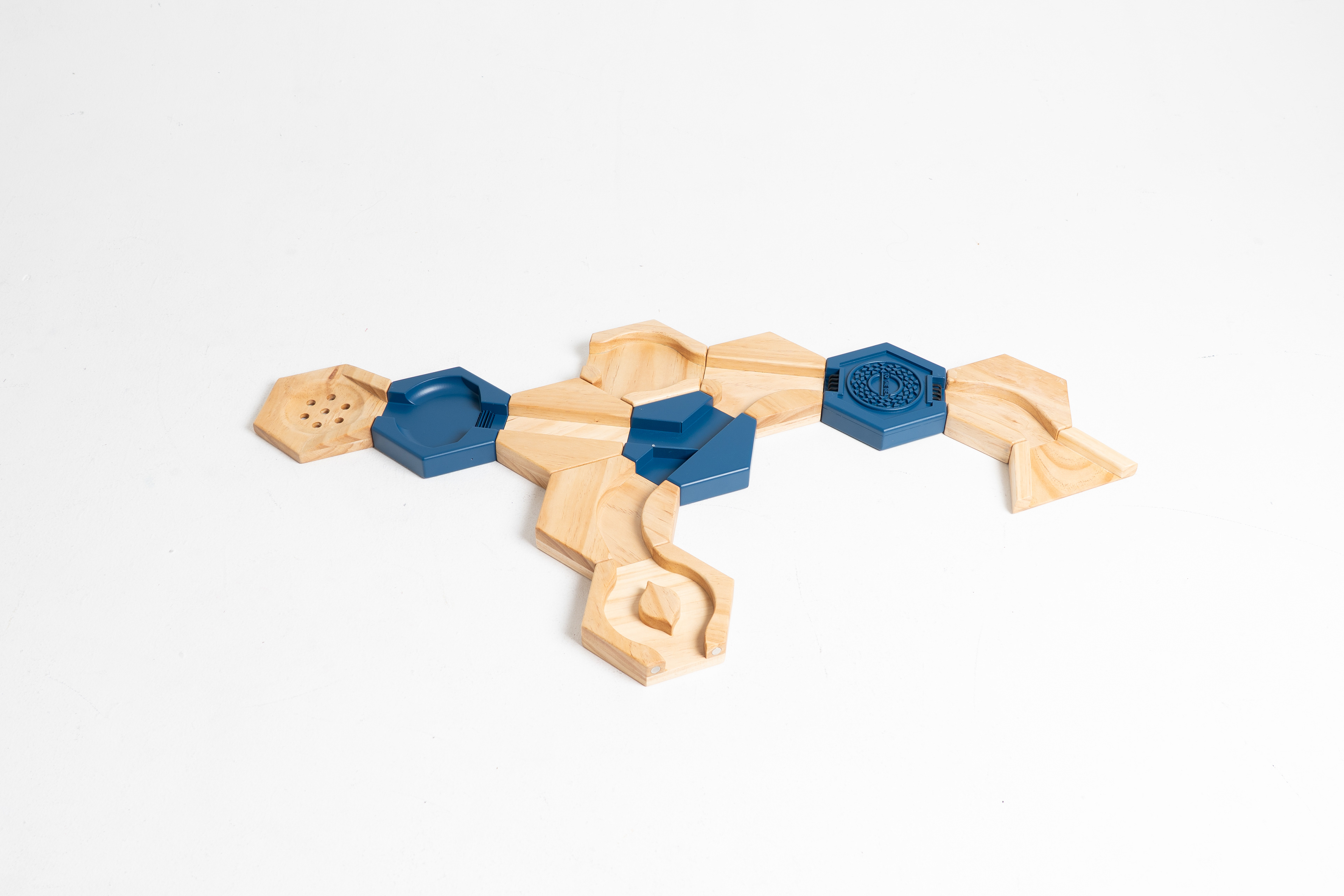
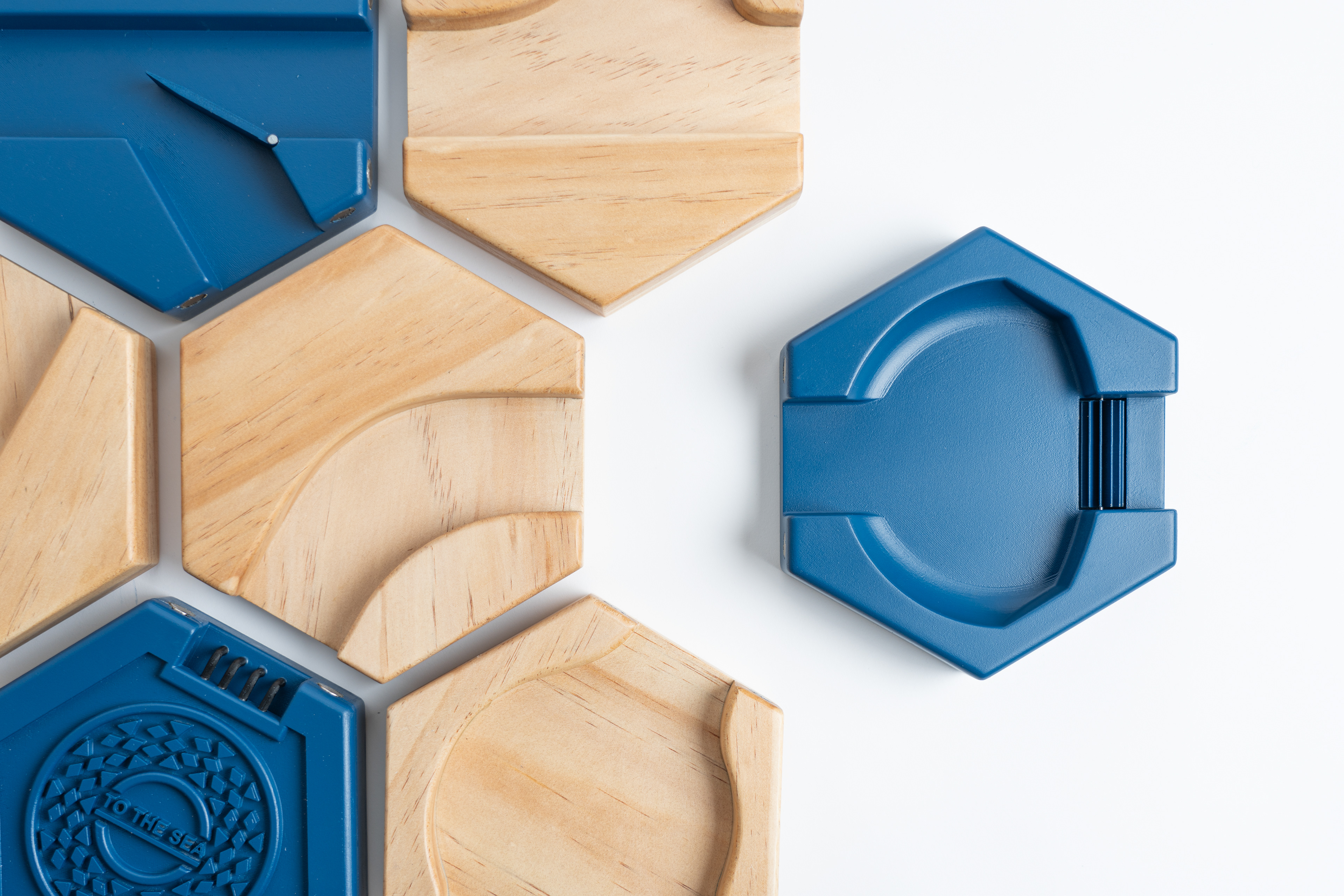
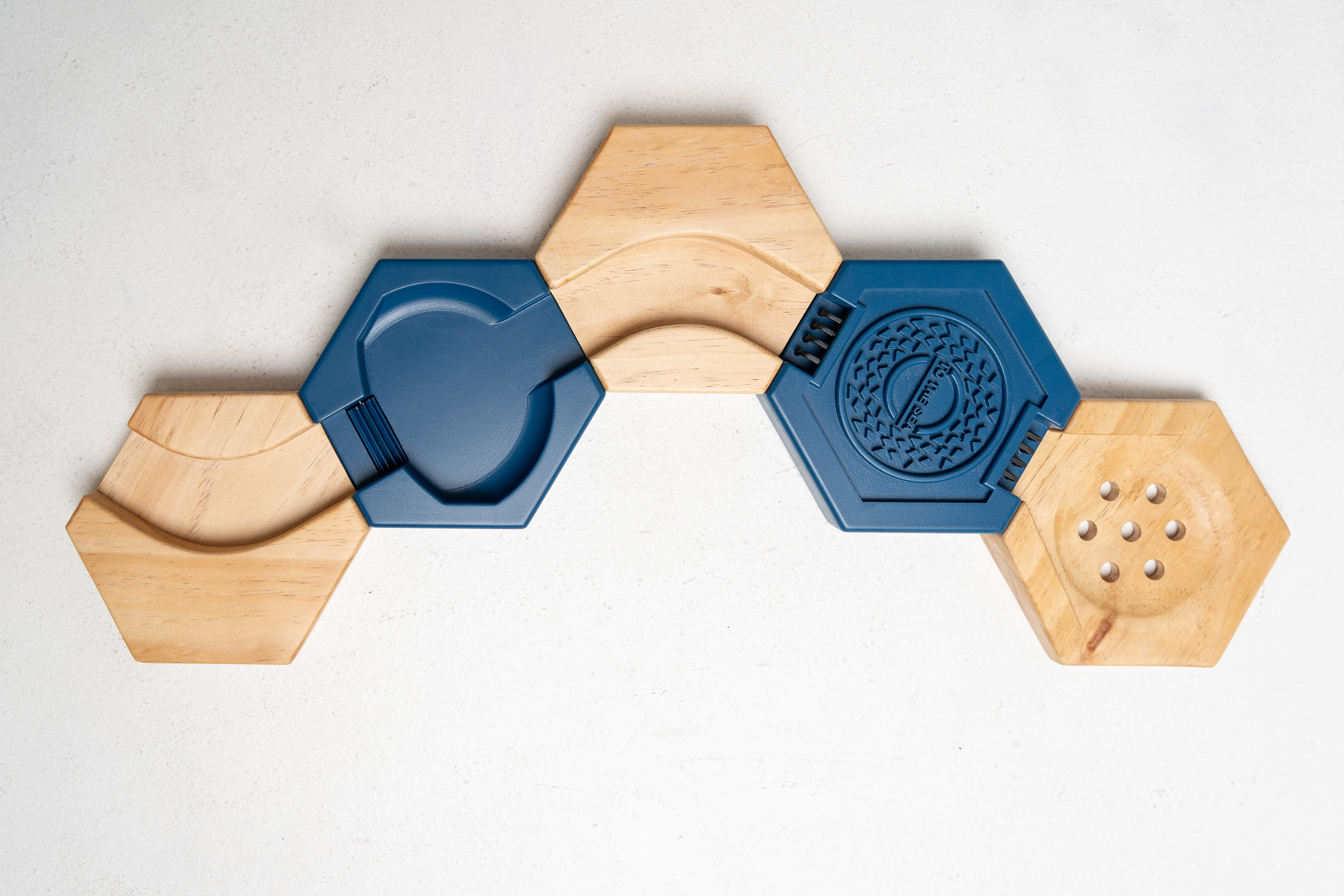
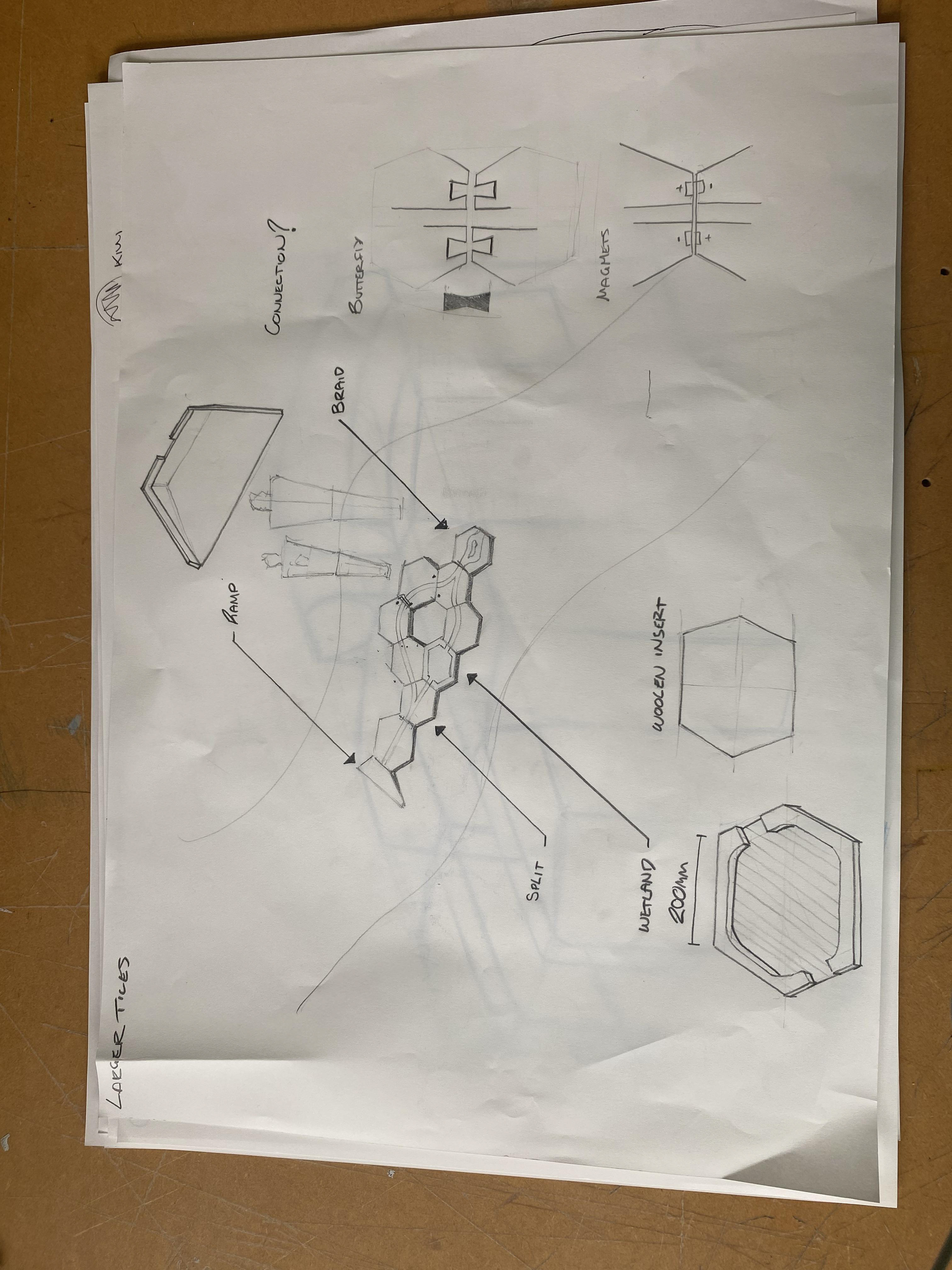
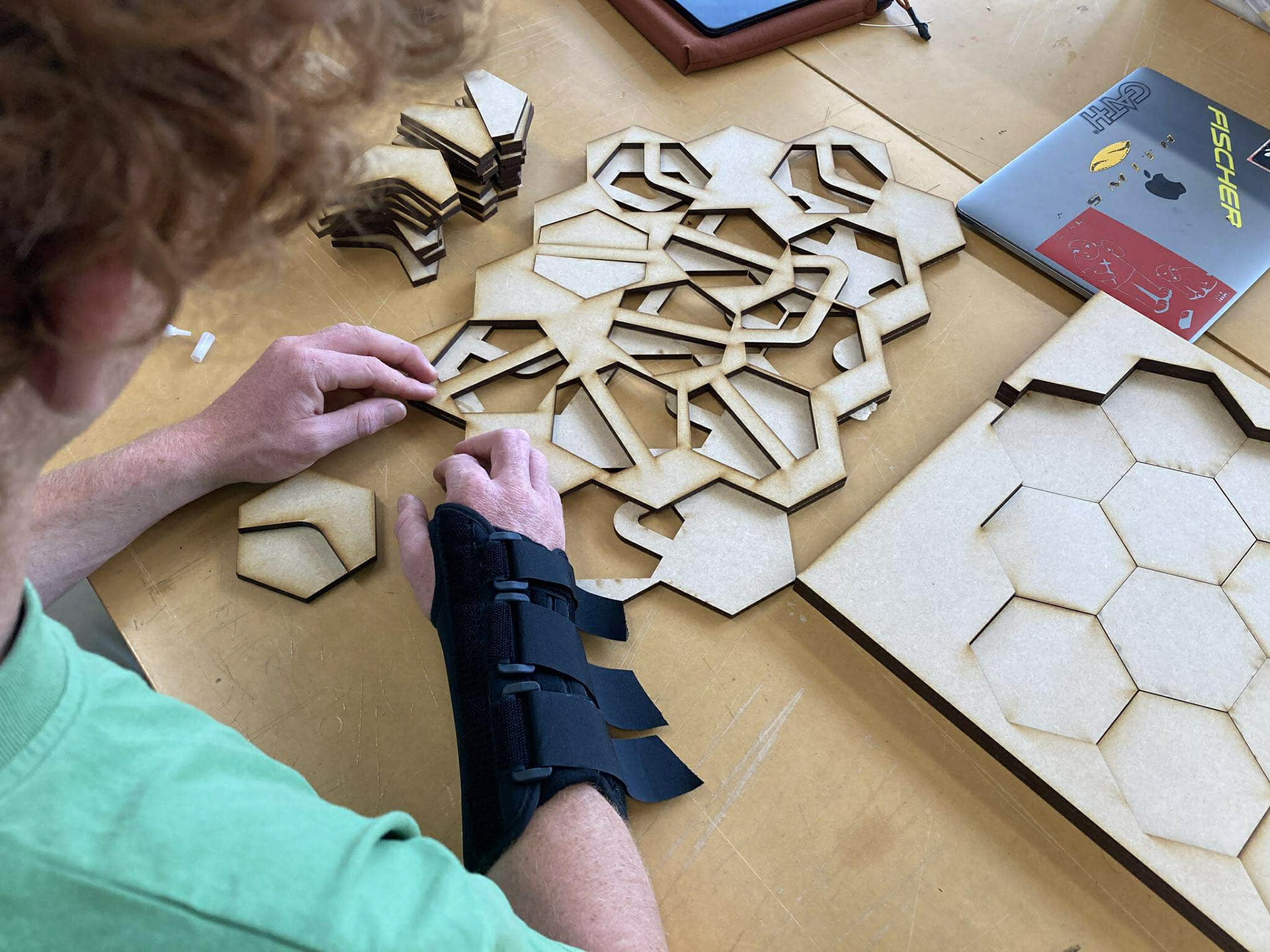
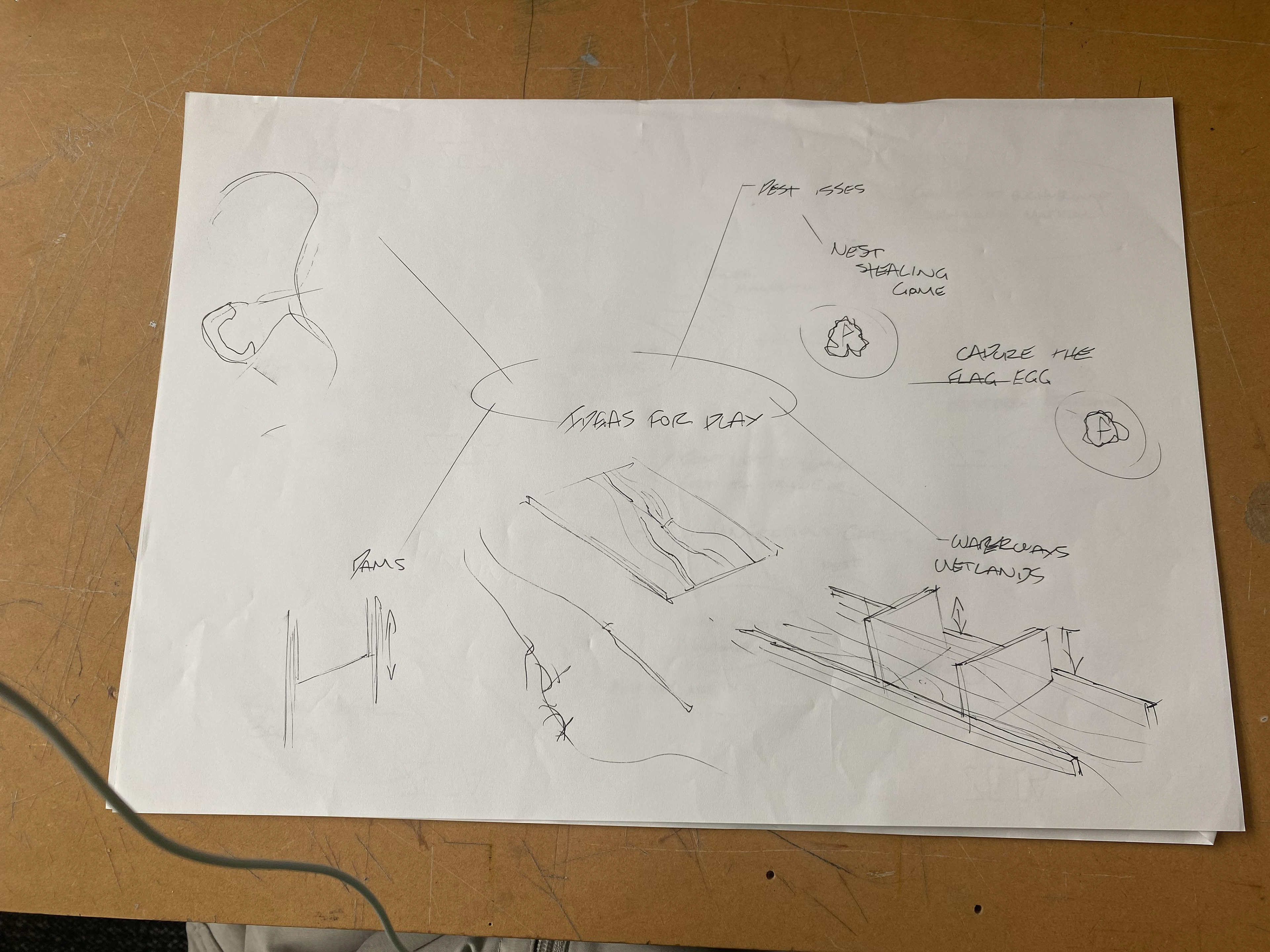
With 11 different tiles, there are nearly infinite configurations for redirecting water flow.
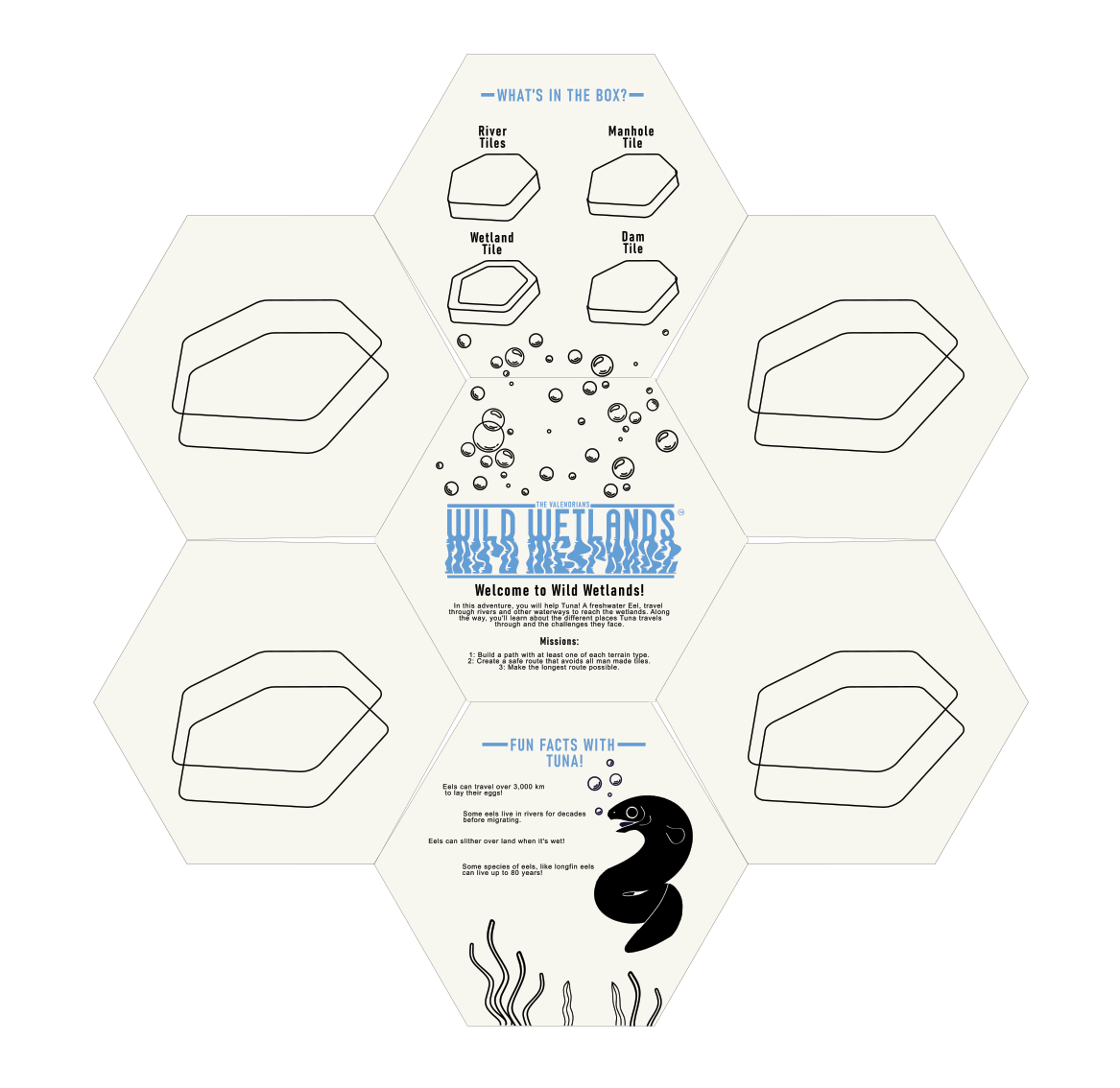
These 11 tiles include:
1 Ramp: The essential starting piece to lift water from the stream.
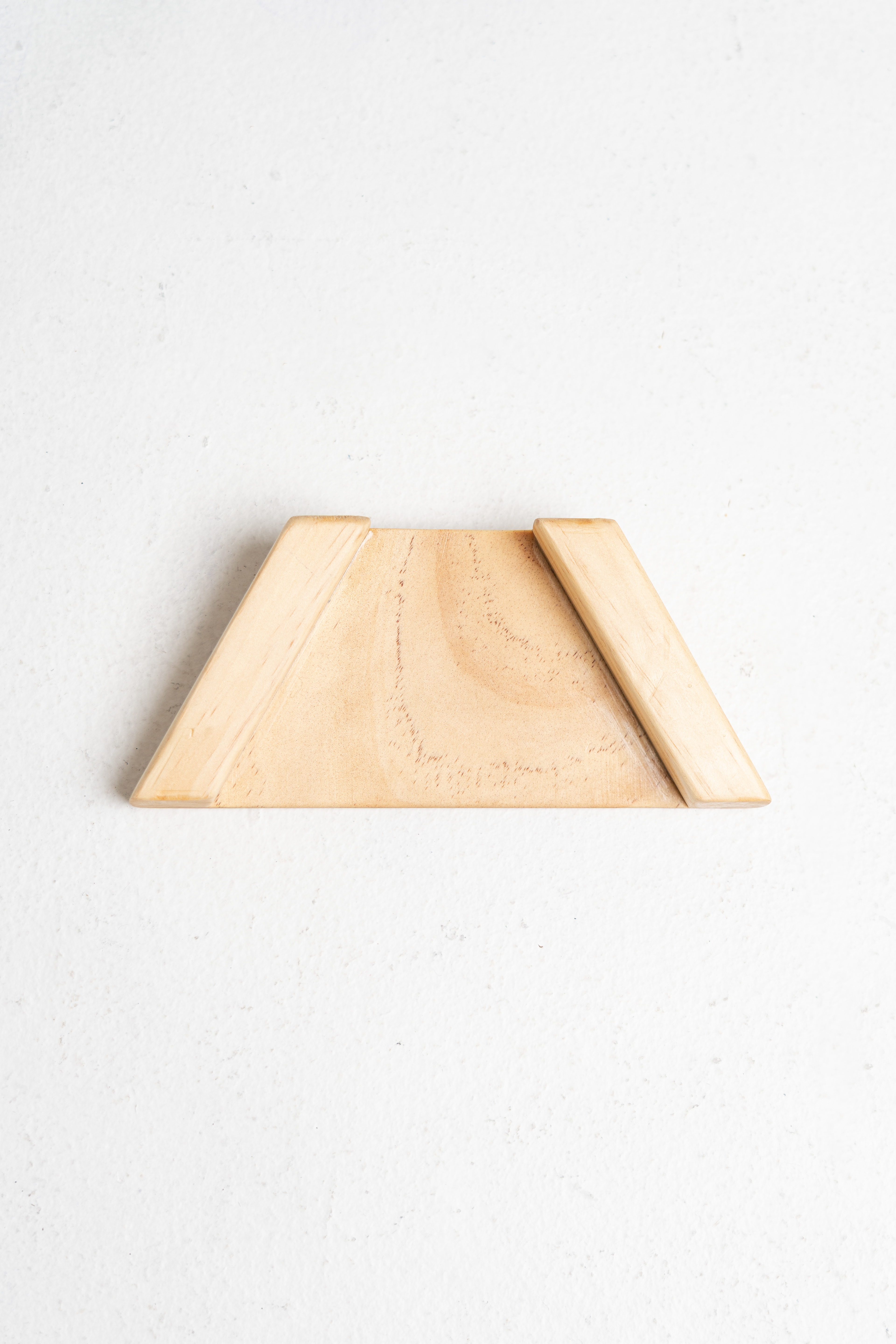
6 Natural Tiles: Designed to mimic the natural curves and multi-directional paths of rivers.
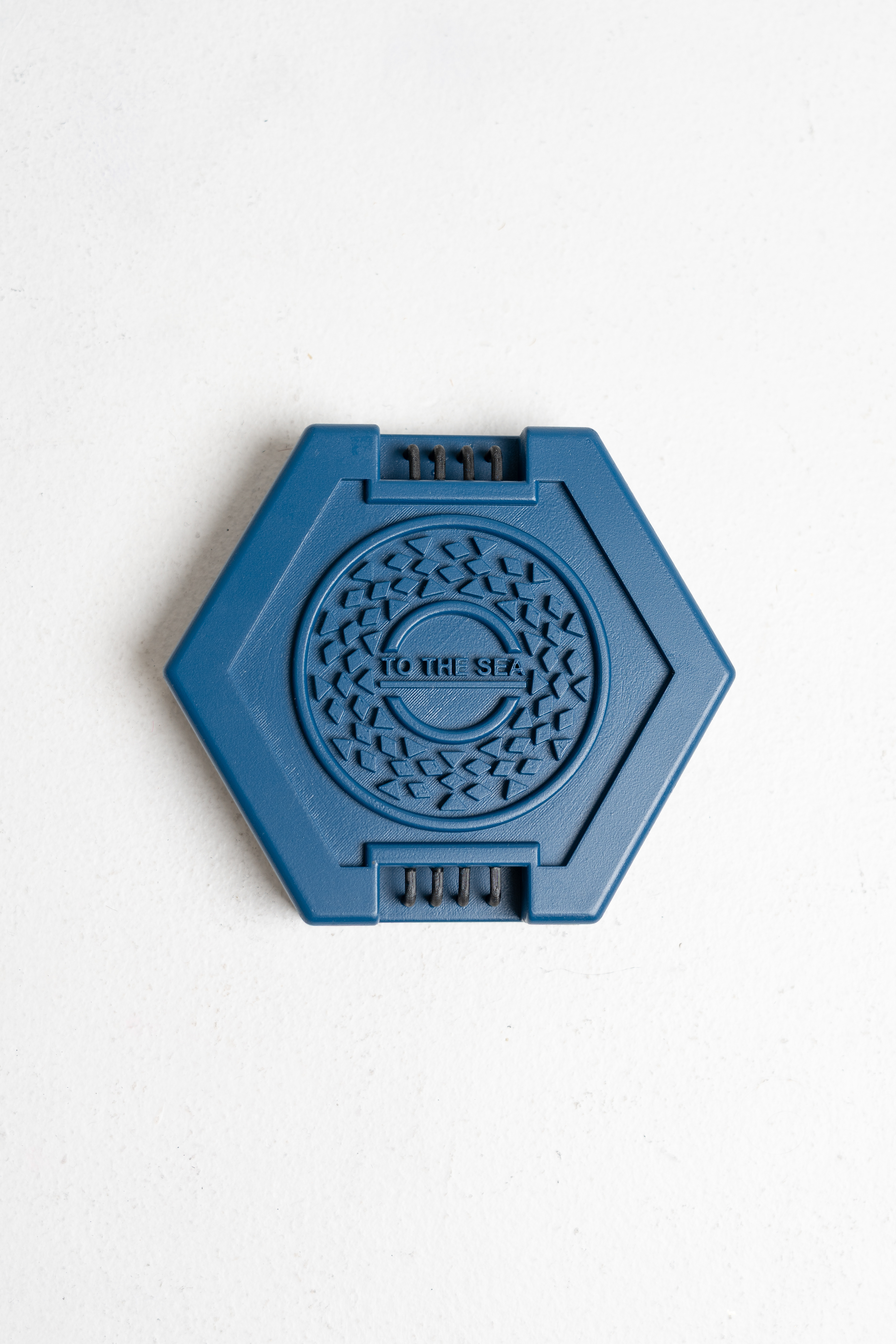
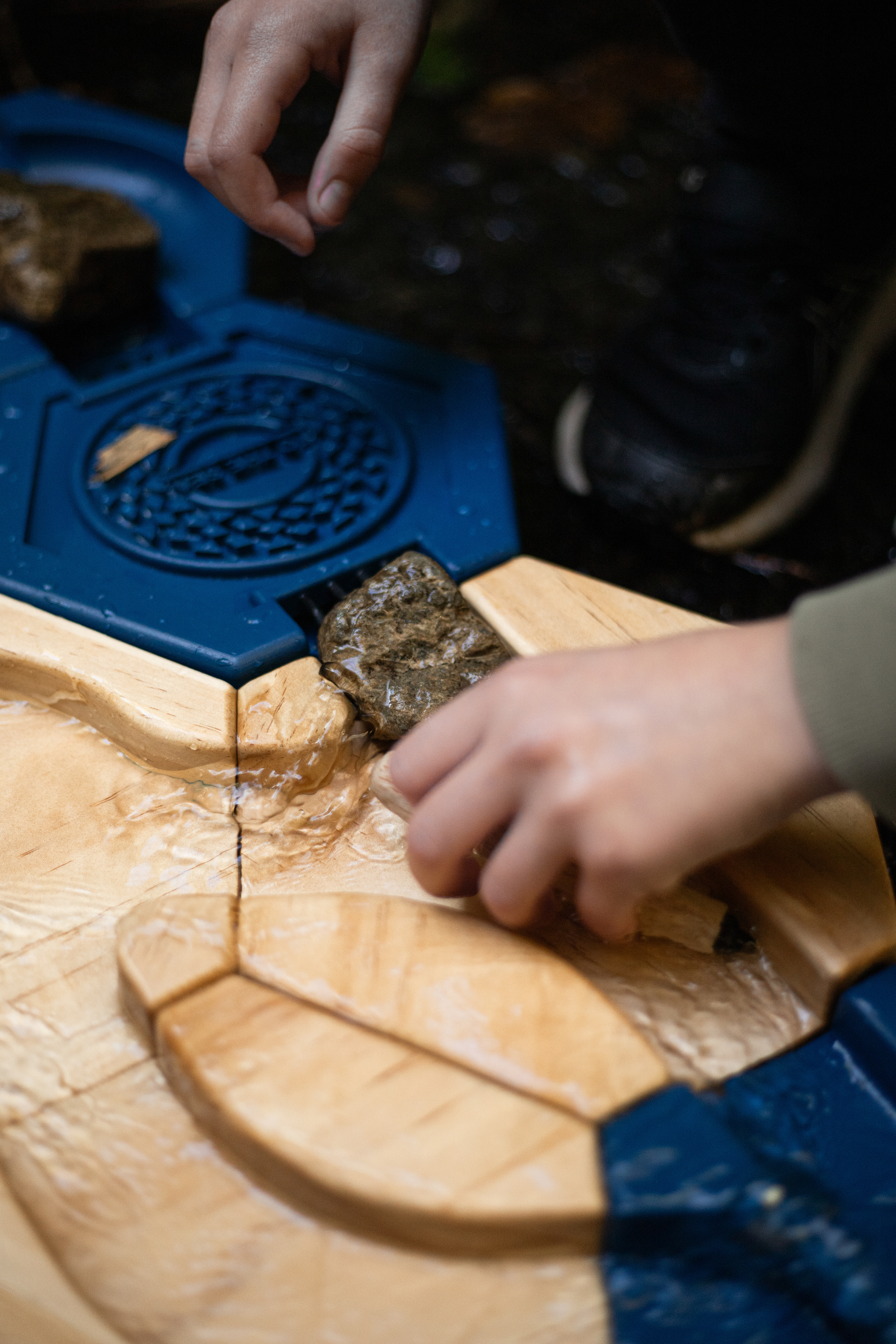
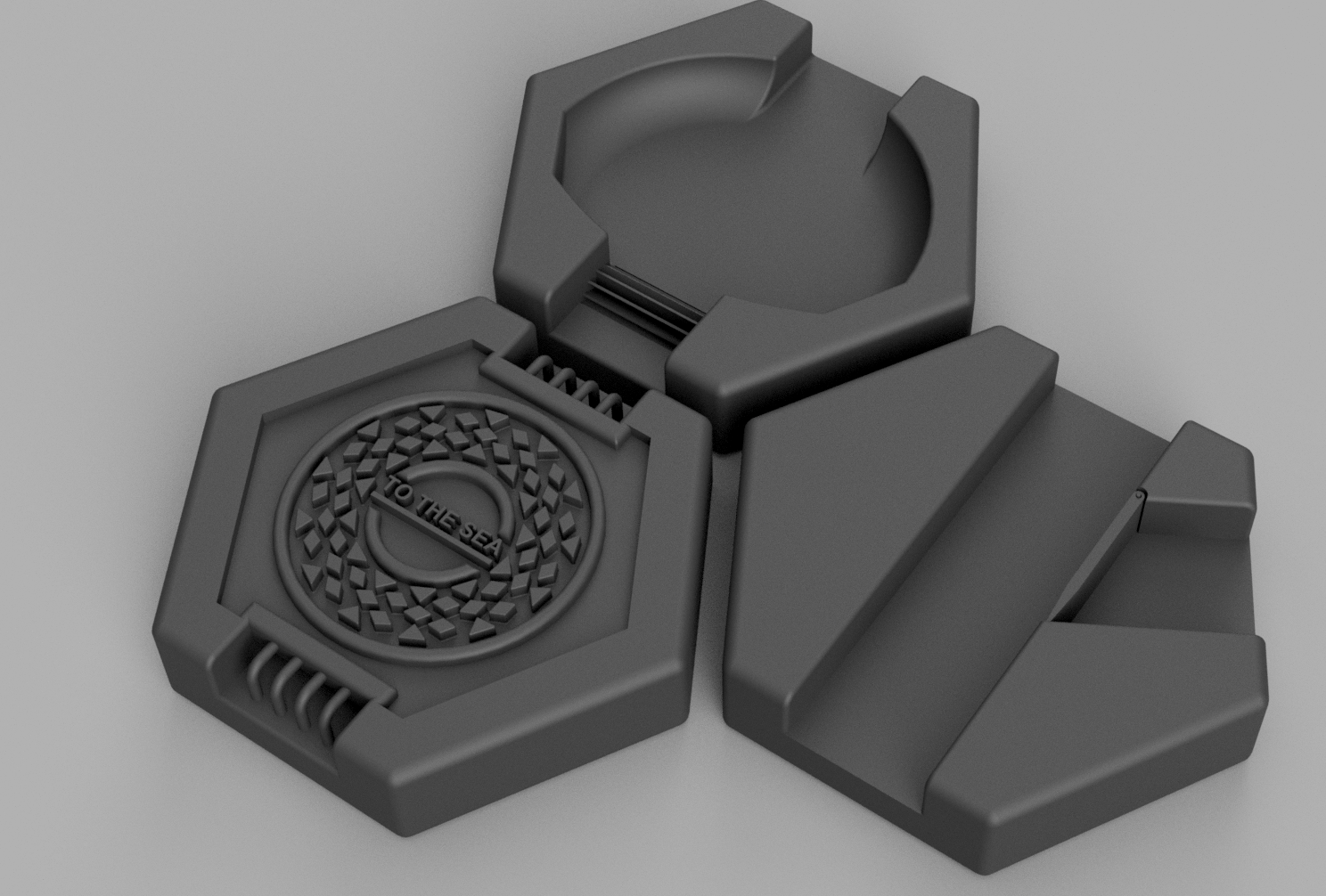
3 Industrial Tiles: Representing human-modified waterways.
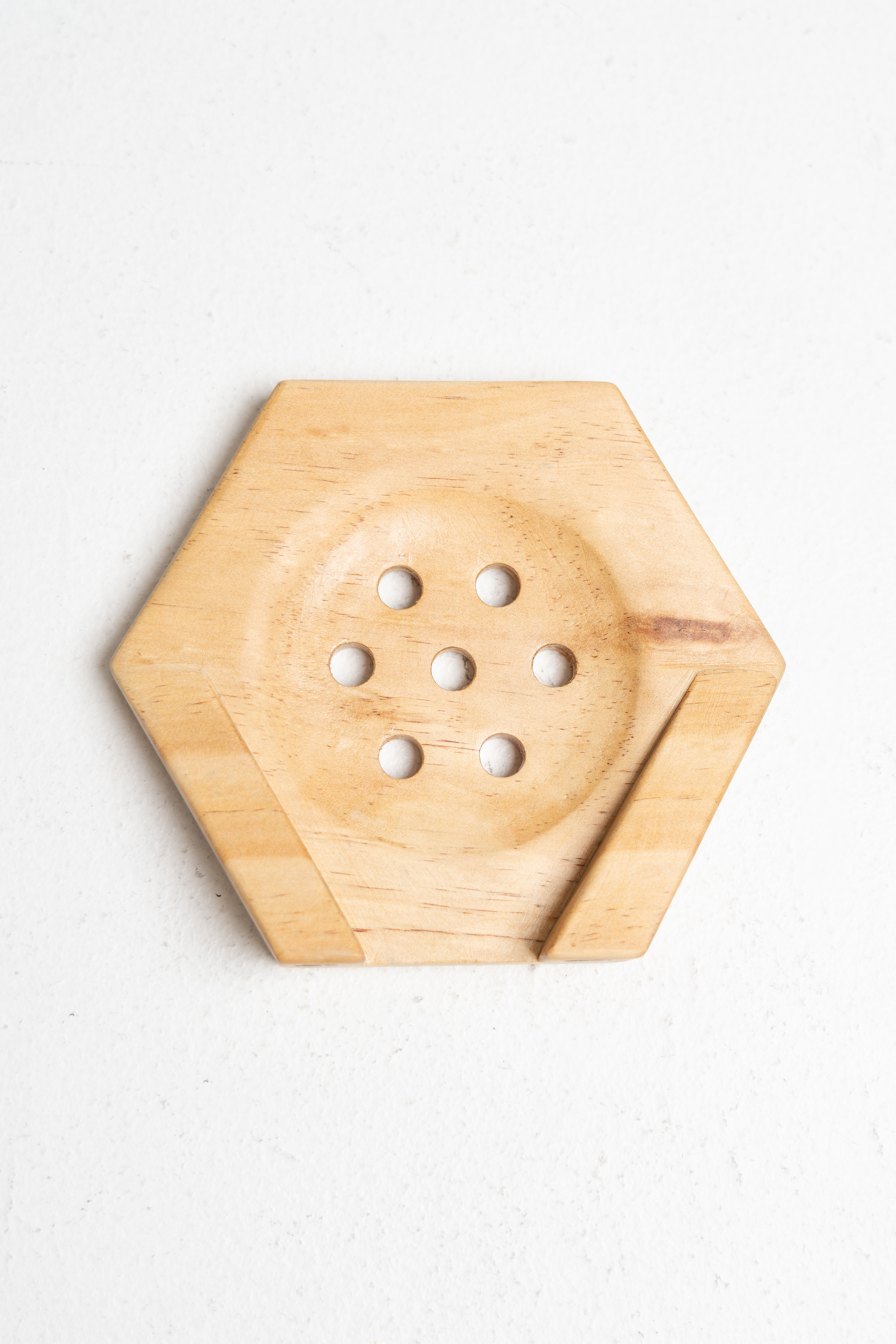
1 Wetland Tile: The end piece, representing the wetland habitat.
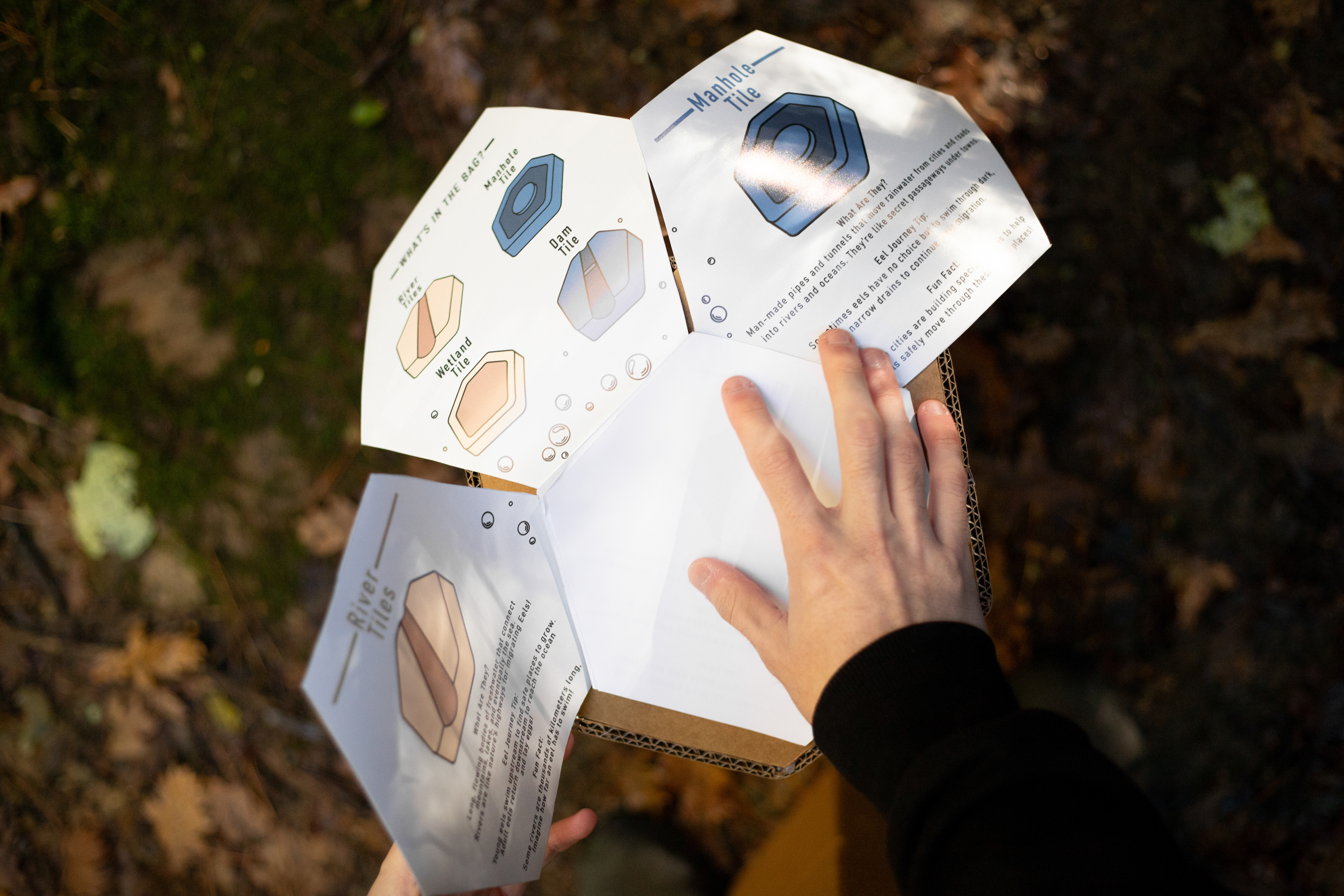
These tiles were also designed to support the secondary purpose of the project: educating players about the effects of human-altered waterways on eel migration.
Eels migrate from wetlands down freshwater rivers to the ocean to spawn. After hatching, young eels must travel back up these rivers to mature in the wetlands, completing their life cycle.
Eels migrate from wetlands down freshwater rivers to the ocean to spawn. After hatching, young eels must travel back up these rivers to mature in the wetlands, completing their life cycle.
However, human modifications to waterways like dams and culverts often block this journey. This real-world issue continues to impact eel populations across Aotearoa.
To communicate this problem, we designed three industrial tiles: a manhole, a dam, and a redirector all painted blue to stand out. These tiles are intended to obstruct the toy eel’s path, visually and physically representing how such modifications challenge eel migration. Players experience this through trial and error as they attempt to reroute the eel.
To communicate this problem, we designed three industrial tiles: a manhole, a dam, and a redirector all painted blue to stand out. These tiles are intended to obstruct the toy eel’s path, visually and physically representing how such modifications challenge eel migration. Players experience this through trial and error as they attempt to reroute the eel.
Wild Wetlands is made from a mix of materials: New Zealand recycled pine PLA and neodymium magnets, finished with a polyurethane varnish to ensure durability in outdoor, wet environments. Neodymium magnets were chosen for their strength and are intentionally left visible to make connections between two tiles intuitive. The toy is scaled larger to allow interactive play for 1–5 players.